

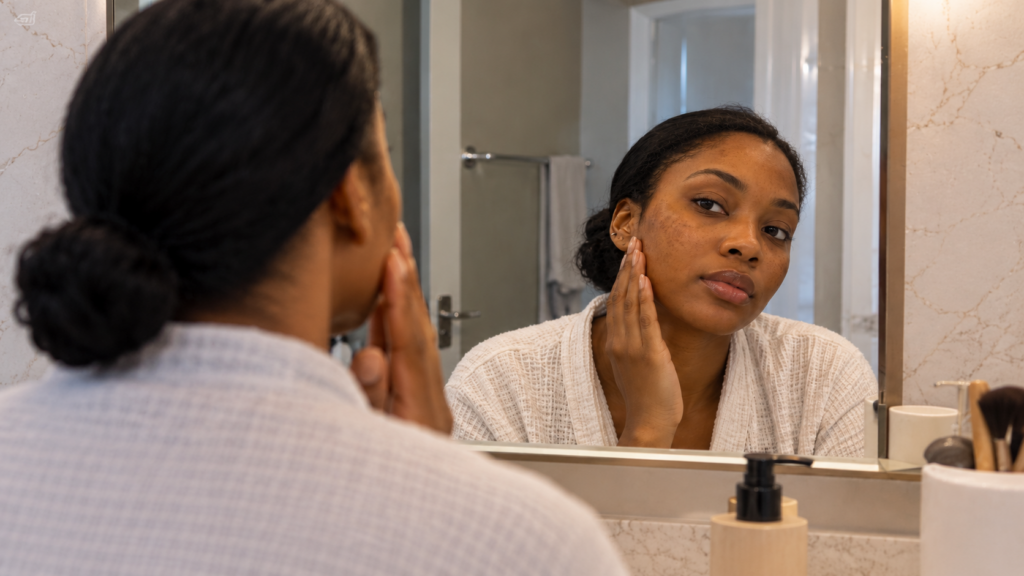
Melasma is one of the most misunderstood skin concerns out there, and no, it isn’t just “stubborn dark spots” that a cream can scrub away.
If you’ve noticed brownish patches settling on your cheeks, forehead, or upper lip, and nothing you try seems to make a difference, you’re not alone.
Here’s the thing: melasma behaves differently from regular dark spots, so it needs a different plan.
At Beauty By Daz, it’s one of the skin questions we hear most, so we put together this beginner-friendly guide on what melasma is, what actually helps, and what to avoid.
So, let’s break it down.
TL;DR: Melasma Can Be Managed With the Right Routine
- Melasma is a long-term pigmentation condition that causes symmetrical brown or grey-brown patches, mostly on the cheeks, forehead, nose, and upper lip.
- Sun exposure, visible light, heat, and hormonal changes can make it worse, which is why those patches may come back even after they’ve faded
- Sunscreen is non-negotiable. Go for a broad-spectrum SPF 30 or higher, and a tinted sunscreen with iron oxides can offer extra protection against visible light.
- Keep your routine simple. Ingredients like tranexamic acid and azelaic acid are good places to start.
- If your melasma is particularly stubborn, prescription treatments like Triluma may be worth discussing with a professional.
- A simple treatment serum plus sunscreen at Beauty By Daz costs roughly ₦23,000 to ₦42,500.
- Don’t expect overnight results. Melasma takes time to fade, so consistency matters more than using every brightening product you can find.
What Is Melasma?
Melasma is a common, long-lasting skin condition that causes flat brown, grey-brown, or dark patches, usually in a symmetrical pattern across the cheeks, forehead, nose, upper lip, or jaw.
It happens when pigment cells become overactive in response to triggers like sun exposure, visible light, heat, and hormonal changes.
Melasma isn’t contagious; it doesn’t hurt or itch, and it doesn’t turn into skin cancer. It’s mainly a cosmetic concern, but it can mess with your confidence, and honestly, that’s completely valid.
It is more common in women and in people with medium to deep skin tones, although men get it too. The tricky part is it tends to be chronic. It can fade with the right care, then creep back when the triggers return.
But that doesn’t mean you’re stuck with it. Let’s talk about what actually helps.
What Causes Melasma and What Makes It Worse?
Melasma happens when pigment cells in the skin become overactive.
The biggest known triggers of Melasma are UV rays, visible light, heat, hormonal changes from pregnancy or birth control, genetics, and anything that irritates or inflames the skin.
Here’s how each trigger plays a part:
- Sun (UV rays): The main trigger. Short daily exposures, like the school run, sitting in traffic or walking to the bus stop, add up.
- Visible light: The light you can see, not just UV, has been shown to worsen melasma, especially in darker skin tones. This is why tinted sunscreen matters.
- Heat: Blood vessels appear to play a role in melasma, so heat and irritation can make it worse. Think hot kitchens, facial steaming, and saunas.
- Hormones: Pregnancy, birth control pills, and other hormonal medicines are common triggers.
- Genetics: Melasma often runs in families.
- Irritation: Harsh scrubs, strong peels, and products that sting can spark inflammation and more pigment.
- Stress and some medications can also play a part.
So, quick question: do your patches look darker after a few busy days outdoors? That’s a BIG clue that light and heat are driving your melasma.
Melasma vs Hyperpigmentation: What’s the Difference?
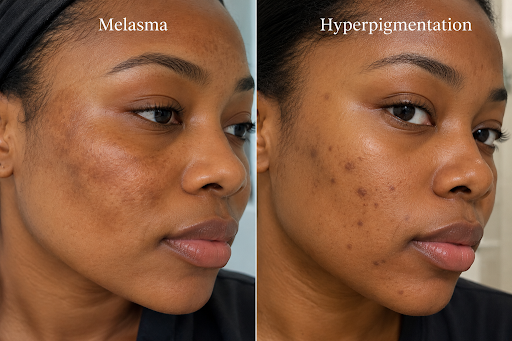
Melasma is a type of hyperpigmentation, but not all hyperpigmentation is melasma. The difference comes down to what causes it, where it shows up, and how it behaves.
Here’s a closer look at what makes melasma different from other types of pigmentation.
| Melasma | Hyperpigmentation | |
| What causes it | Sun exposure, visible light, heat, hormonal changes, and genetics | Acne inflammation (called post-inflammatory hyperpigmentation), injuries, irritation, or sun exposure |
| What it looks like | Larger brown or grey-brown patches, often symmetrical | Usually flat dark spots or patches in the affected area |
| Where it appears | Often the cheeks, forehead, nose, upper lip and jaw | Anywhere the skin has experienced inflammation, injury or excess pigment |
| How it behaves | Can be stubborn and may return when triggered by sun, heat or hormones | Often fades steadily with spot treatments or simple exfoliating acids. |
| Where to start | Daily sunscreen + tranexamic or azelaic acid | Address the underlying cause + sunscreen + a suitable brightening ingredient |
P.S.: If your skin has gotten darker or more irritated after using strong brightening or “toning” products, don’t panic and don’t start throwing more actives at it. Give your skin a break, keep things gentle and stay consistent with sunscreen.
P.S.S: If you’re curious about the difference between brightening and bleaching, our guide explains why brightening isn’t bleaching.
Which Ingredients Help With Melasma?
The ingredients that can help with melasma include:
- Tranexamic acid
- Azelaic acid
- Retinoids
- Niacinamide
- Vitamin C
- Hydroquinone
- Sunscreen with iron oxides
Here’s a quick look at what each one does:
| Ingredient | What It Does | What to Look For | When to Use | What to Expect |
| Tranexamic acid | Helps target excess pigment production | A clearly stated %, often 2-5% in serums | Morning or night | Generally gentle |
| Azelaic acid | Slows pigment production and calms redness | 10% cosmetic; 15-20% in medicated gels | Morning or night | May tingle at first |
| Niacinamide | Helps reduce pigment transfer and supports the barrier | 2-10% | Morning or night | High % can sting sensitive skin |
| Vitamin C | Antioxidant that supports brighter, more even-looking skin | A stable form you can tolerate | Morning | Can irritate some skin |
| Retinoids | Speed up skin cell turnover | Prescription tretinoin or gentle retinol | Night only | Can cause dryness; avoid in pregnancy |
| Hydroquinone | Strong pigment reducer | Prescription only | Night, short courses | Use only under supervision |
| Iron oxides | Help protect against visible light | Tinted SPF 30+ | Morning, reapply | Found in tinted formulas |
For a wider look at serum options, see our roundup of the best serums for hyperpigmentation in Nigeria.
Beauty By Daz Tip: Don’t assume two products are the same just because they contain the same active. Check the percentage when it’s listed, or look at the ingredient list to see where the active appears.
What Is the Best Treatment for Melasma on the Face?
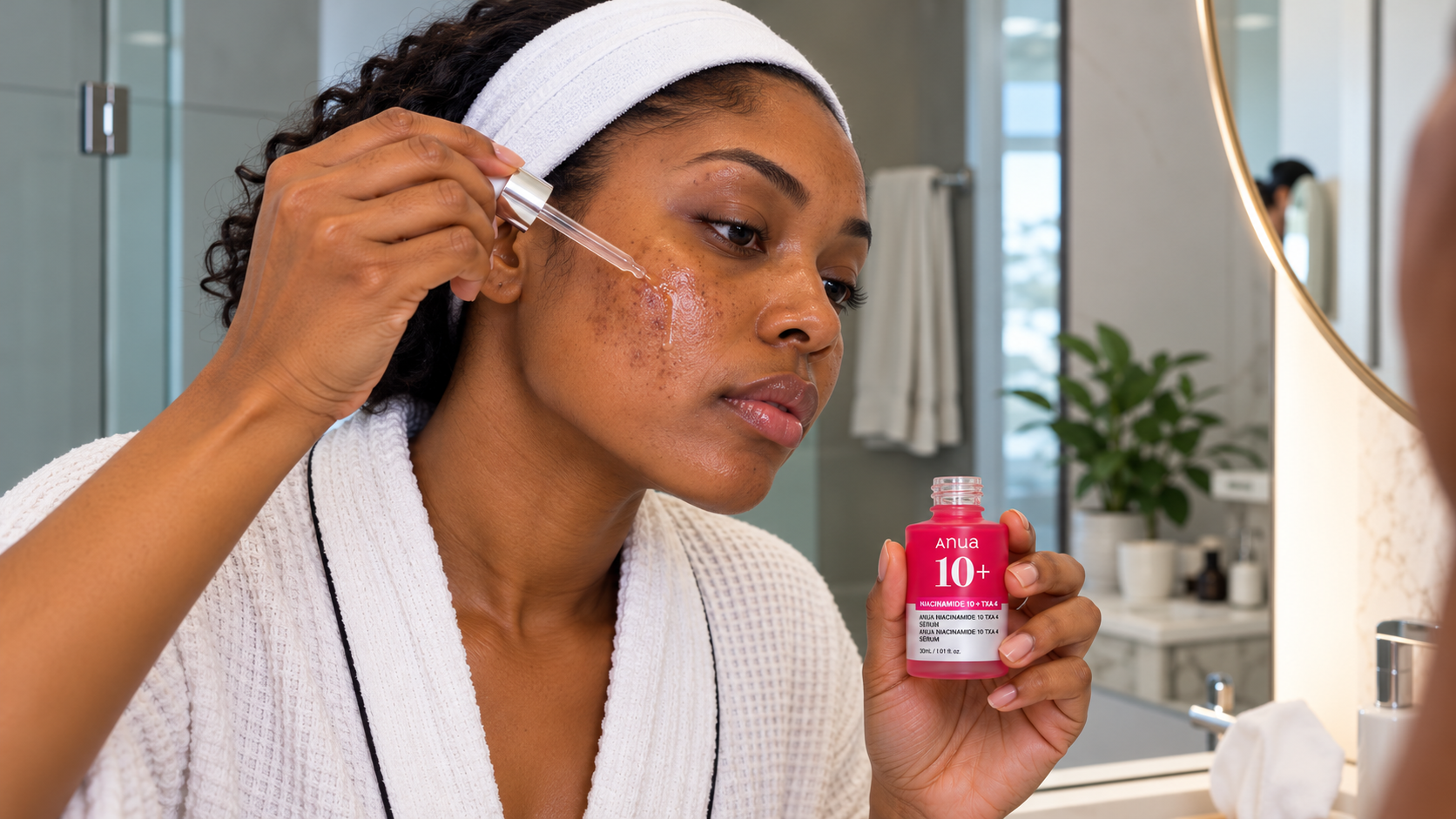
The best treatment for melasma is a layered plan that starts with daily sunscreen, followed by a gentle ingredient like tranexamic acid or azelaic acid. If your melasma is stubborn, you can move on to prescription creams like Triluma, but only when prescribed by a dermatologist.
See it as a ladder. Start at the bottom, and only climb when you need to.
1. Sun Protection: The Foundation
Sun protection is the non-negotiable first step, because every other treatment is working against fresh pigment if light and heat keep triggering your skin.
Use a broad-spectrum sunscreen with SPF 30, including cloudy and rainy-season days, and reapply every two hours when you’re outdoors or sweating.
Shade and a wide-brimmed hat help too.
Just remember: sunscreen protects your progress, but it won’t fade existing patches on its own. If you’re still choosing one, our guide to the best sunscreens in Nigeria for every skin type is a good place to start.
2. Over-the-Counter Ingredients
Over-the-counter ingredients like tranexamic acid, azelaic acid, and niacinamide are the usual next step, since they calm pigment production gently enough for daily use.
Start with one active, give it at least 8 to 12 weeks, and keep your sunscreen consistent.
We break down how each ingredient works in the next section.
3. Prescription Treatments Like Triluma
Prescription creams are stronger options for moderate to severe or stubborn melasma, and you should use them under a healthcare professional’s guidance rather than as everyday skincare.
The best-known example is a triple-combination cream that pairs hydroquinone, tretinoin, and a mild steroid. Triluma is one of these. These creams can work faster than over-the-counter options but carry more side effects, so they’re used for limited periods.
4. In-Clinic Treatments
Chemical peels, lasers and microneedling can help some people with stubborn melasma, but they’re usually add-ons to a good home routine rather than a replacement for one.
Choose an experienced dermatologist, especially if you have a deeper skin tone. Aggressive treatments can trigger inflammation and new pigmentation.
Don’t be shy about asking how often they treat skin like yours before you book.
What Are the Best Products for Melasma in Nigeria?
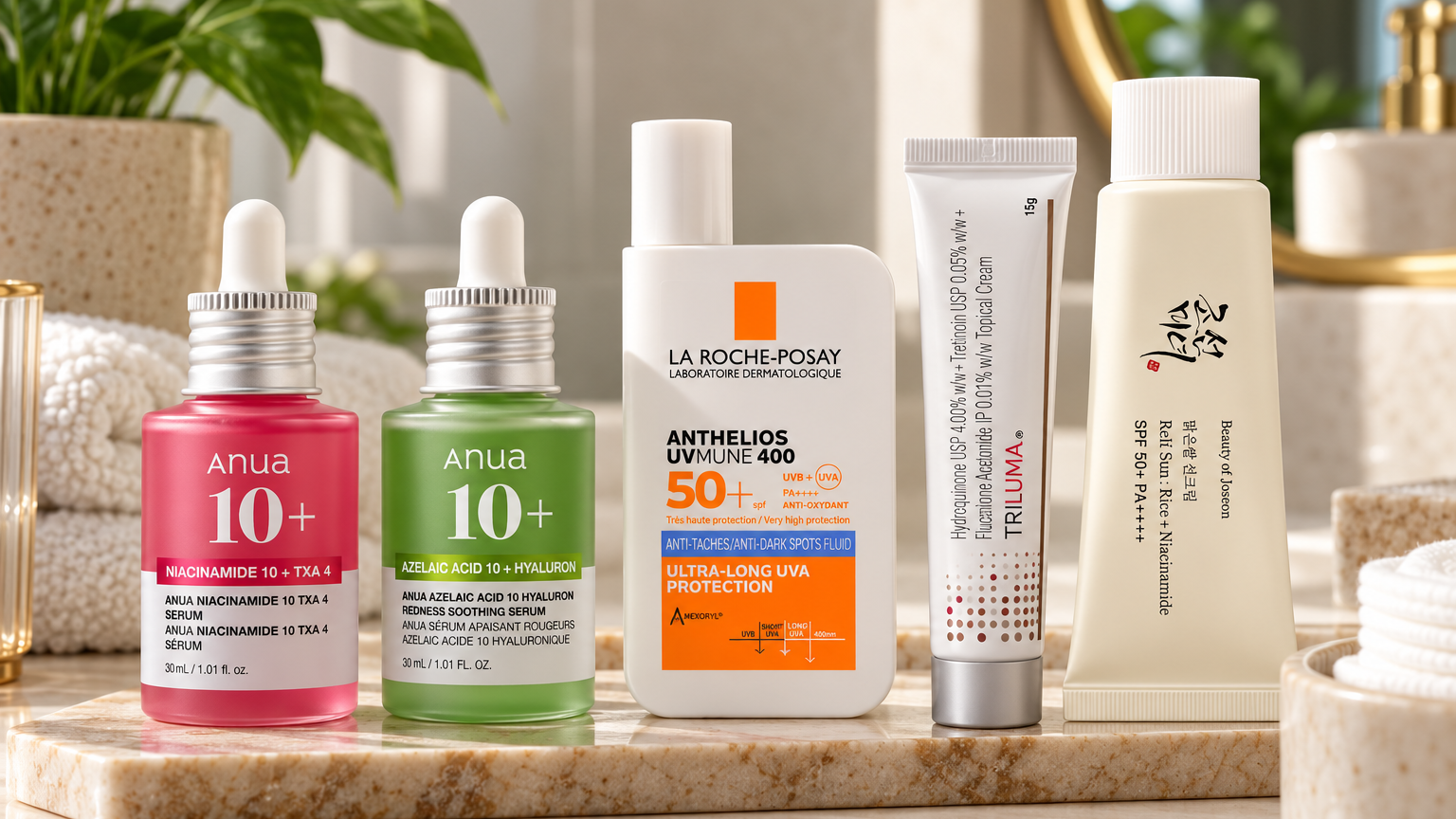
Based on the needs we commonly see among Nigerians with pigmentation concerns, these are the melasma treatment options we’d recommend considering at Beauty By Daz.
1. Best Tranexamic Acid Products for Melasma
If you’re new to actives and want a melasma-focused serum, Anua Niacinamide 10% + TXA 4% Serum is a good start.
It combines 4% tranexamic acid with 10% niacinamide, ceramides, and hyaluronic acid, and suits oily, combination, and acne-prone skin well.
Want a closer look at the Anua serum? Read our full Anua Niacinamide + TXA review.
For very sensitive skin, the APLB Tranexamic Acid Niacinamide Ampoule is a gentler option but it contains 0.1% tranexamic acid, so we wouldn’t consider it a main melasma treatment.
2. Best Azelaic Products for Melasma
If your melasma comes with breakouts, redness or post-acne, our suggestion is the Anua Azelaic Acid 10% + Hyaluron Redness Soothing Serum. It is made for sensitive and acne-prone skin. Its limitation is that 10% is a gentler cosmetic strength, so results build slowly.
If you need a stronger option, 20% azelaic acid gels like Ezanic may be worth considering,
And if you want to know more about what to expect from a 20% formula? Read our full Ezanic azelaic acid gel review.
3. Best Sunscreen for Melasma
The best sunscreen for melasma is the one you’ll wear generously every single day, ideally broad-spectrum SPF 30 or higher with a tint for visible-light protection.
The La Roche-Posay Anthelios UVMune 400 Anti-Dark Spots Fluid SPF50+ is a great option at ₦23,500. If you’re on a tighter budget, the Beauty of Joseon Relief Sun SPF50+ is another comfortable everyday option at ₦13,500.
You’ll want to be careful where you buy either product, as counterfeit versions can be found in the Nigerian market.
So get the original La Roche-Posay Anthelios UVMune 400 Anti-Dark Spots Fluid SPF50+ and Beauty of Joseon Relief Sun SPF50+ from Beauty By Daz who sources their products directly from the manufacturers
4. Triluma: A Prescription Treatment for Melasma
Triluma is a prescription cream for moderate to severe melasma, so it’s not something to add to your routine casually. It combines hydroquinone, tretinoin, and fluocinolone acetonide, and should only be used under a healthcare professional’s guidance.
Because it’s a stronger treatment, you may experience dryness, peeling, or redness while using it. It’s also intended for short-term use, so don’t treat it like your everyday brightening cream.
If your dermatologist has recommended Triluma, you can find the 15g tube at Beauty By Daz
When it comes to prescription skincare, where you buy matters. Avoid picking up random hydroquinone or steroid creams from unverified vendors just because they’re cheaper. Your skin deserves better.
Ready to build your melasma-friendly routine? Explore Beauty By Daz’s range of serums for dark spots and sunscreens to find options that suit your skin and budget.
How Much Do Melasma Products Cost in Nigeria?
A simple melasma routine at Beauty By Daz costs roughly ₦23,000 to ₦42,500 for one treatment serum plus one sunscreen, before you add a cleanser and moisturizer.
| Product | Best For | Price |
| APLB Tranexamic Acid Niacinamide Ampoule, 40ml | Very sensitive skin, gentle support | ₦9,950 |
| Beauty of Joseon Relief Sun SPF50+, 50ml | Budget daily sunscreen | ₦13,500 |
| Triluma, 15g | Prescription, supervised use only | ₦14,850 |
| Anua Niacinamide 10% + TXA 4% Serum, 30ml | Beginners, oily or combination skin | ₦17,500 |
| Anua Azelaic Acid 10% + Hyaluron Serum, 30ml | Melasma with acne or redness | ₦18,850 |
| La Roche-Posay UVMune 400 Anti-Dark Spots SPF50+, 50ml | High daily protection | ₦23,500 |
At Beauty By Daz. We’ve helped many people manage their melasma, and you could be next. Not sure which product is right for you? Book a free consultation with us, and let’s figure out what works for your skin.
What Is the Best Skincare Routine for Melasma?
The best skincare routine for melasma is a simple one, with gentle cleansing, one targeted treatment, moisturizer, and sunscreen in the morning and the same gentle approach at night.
Here’s a simple skincare routine for melasma to follow in the morning and at night:
| Step | Morning | Evening |
| 1. Cleanse | Gentle, fragrance-free cleanser or rinse with lukewarm water | Cleanse thoroughly to remove sunscreen and makeup |
| 2. Treatment | Tranexamic acid, azelaic acid, or vitamin C | One treatment active; a plain moisturiser night is fine if you treated in the morning |
| 3. Prescription treatment | — | If prescribed Triluma or a retinoid, use it as directed instead of your other actives |
| 4. Moisturise | Lightweight, non-irritating moisturiser | Barrier-supporting moisturiser |
| 5. Sunscreen | Broad-spectrum SPF 30+ as the last step | — |
| 6. Reapply | Every two hours when outdoors | — |
Beauty By Das Tip: You don’t need to use every active at once. When it comes to melasma, consistency beats a complicated routine. So no tranexamic acid, azelaic acid, and a retinoid in one routine.
What Mistakes Can Make Melasma Worse?
The mistakes that most often make melasma worse are:
- Skipping sunscreen on cloudy or indoor days: UVA and visible light still reach your skin through clouds and windows.
- Using bleaching creams or “toning” mixtures: Unregulated lightening products can contain high-strength hydroquinone, mercury or steroids, which can cause thinning, irritation and even more pigmentation.
- Using steroid creams long-term: They can damage the skin and cause breakouts and other problems.
- Scrubbing the patches: Melasma pigment can sit deep in the skin, so scrubbing only irritates it.
- Stacking strong actives: Stinging, tightness and flaking mean your barrier needs a break. Here’s how to recognise a damaged skin barrier.
- Too much heat: Facial steaming, saunas and long hours over a hot stove can all aggravate melasma.
- DIY remedies: Lemon juice, toothpaste and similar hacks irritate the skin without fixing the problem.
- Switching products every week: Melasma needs months, not days, so give each product a fair chance.
Frequently Asked Questions About Melasma Treatment
1. Does Melasma Ever Fully Go Away?
Melasma can fade significantly and sometimes clears completely, especially after a trigger like pregnancy passes. However, it often returns with sun, heat or hormonal changes.
2. What Triggers Melasma to Worsen?
Sun exposure, visible light, heat, hormonal changes and skin irritation are the most common triggers. Harsh products and unsupervised bleaching creams can also make melasma darker.
3. What Is the Best Sunscreen for Melasma?
The best sunscreen for melasma is a broad-spectrum SPF 30 or higher that you’ll wear daily, ideally tinted with iron oxides for visible-light protection. Beauty By Daz stocks options for different skin types and budgets.
4. Which Serum Is Best for Melasma?
Tranexamic acid and azelaic acid serums are good starting points for most beginners, depending on whether you also have acne, redness or sensitivity.
5. How Long Does Melasma Take to Fade?
Melasma is slow to fade, and noticeable improvement can take 8–12 weeks or longer with consistent treatment and daily sunscreen.
6. Can You Cure Melasma From the Inside?
There’s no proven supplement or diet that cures melasma. Oral tranexamic acid can help some people, but it’s a prescription medicine that needs a doctor’s assessment first.
7. Where Can I Buy Original Melasma Products in Nigeria?
You can buy authentic melasma-friendly products, including tranexamic acid serums, sunscreens and prescription Triluma, at Beauty By Daz online or in-store at Ogudu City Mall, Lagos.
8. What Should I Avoid if I Have Melasma?
Avoid skipping sunscreen, scrubbing, stacking strong actives, long-term steroid creams and unregulated lightening products. Limit heat exposure where you can.
In Summary: How to Treat Melasma in 6 Steps
Step 1: Confirm what you’re dealing with: If you’re not sure it’s melasma, book a virtual skin consultation so we can understand your skin concerns and help you figure out where to start.
Step 2: Wear sunscreen daily
Step 3: Choose one targeted treatment like tranexamic acid or azelaic acid.
Step 4: Follow a simple routine. You don’t have to use all the actives at once.
Step 5: Avoid common triggers like harsh scrubs, bleaching creams, stacked actives, and anything that irritates your skin.
Step 6: Be patient. Melasma takes time to improve. Slow progress is still progress.
And remember, Beauty By Daz is your one-stop shop for original skincare products in Nigeria.