
Is your skin purging? Don’t freak out yet.
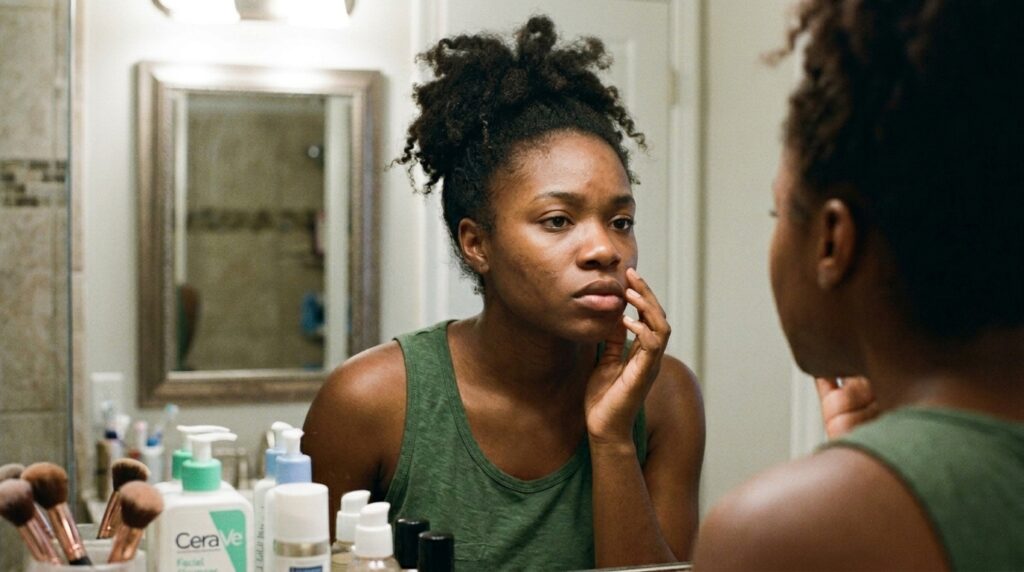
So you just started a new active like tretinoin and within days your skin looks worse than before you started.
What you’re likely experiencing is skin purging, and it’s one of the most misunderstood phases in any skincare journey.
Skin purging is not a sign your new product is failing you.
In most cases, it’s actually a sign it’s working.
Here’s everything you need to know from how to tell purging skin apart from a genuine breakout, what to do (and not do) while you wait it out and more.
TL;DR: Skin Purging: What It Is, How Long It Lasts, and More
- Purging skin is caused by actives like retinoids, AHAs, BHAs, and vitamin C — not by irritants or pore-cloggers
- Skin purging before and after results are worth the wait: most people see significantly clearer skin once the purge phase ends
- Skin purging vs breakout: purging happens fast, stays in your usual breakout zones, and clears faster than a typical pimple
- Skin purging is good in most cases, it means your actives are accelerating the skin renewal process
- Skin purging typically four to eight weeks; anything beyond that deserves a second look
- Do not try to stop the process with harsh spot treatments, it often makes things worse
- To handle skin purging, support your skin with a gentle cleanser (try the CeraVe Acne Control Cleanser or CeraVe Acne Foaming Cream Cleanser), a barrier-repairing moisturiser like the Purito Mighty Bamboo Panthenol Cream, and daily sunscreen without fail.
What Is Skin Purging?
Skin purging is when your skin pushes clogged pores and tiny pimples that were already forming underneath to the surface faster than usual, making your skin look worse before it gets better.
Think of it less as a reaction and more as an acceleration.
The breakouts that were already forming under your skin get fast-tracked to the surface all at once, which is why it can look dramatic at first.
This is different from purging skin caused by an allergic reaction.
Those are not purges, they’re just breakouts caused by the wrong product. But more on this later.
Skincare Ingredients that Cause Purging
The ingredients most commonly associated with purging skin include:
- Retinoids. This includes over-the-counter retinol and prescription-strength options like the Aret Tretinoin 0.025% Gel.
- AHAs and BHAs. This includes chemical exfoliants like salicylic acid, glycolic acid, and lactic acid.
- Vitamin C. This purges the skin particularly in higher concentrations, where it speeds up surface renewal.
- Niacinamide. It doesn’t purge as much, but some people experience a brief adjustment period.
If you’ve just started using something like the Paula’s Choice 2% BHA Liquid Exfoliant or the Nineless Molecule Clear Salicylic Acid Serum and your skin suddenly looks worse, there’s a very real chance you’re in a purge.
Related: Everything you need to know about skin purging.
Skin Purging vs Breakout: How to Tell the Difference
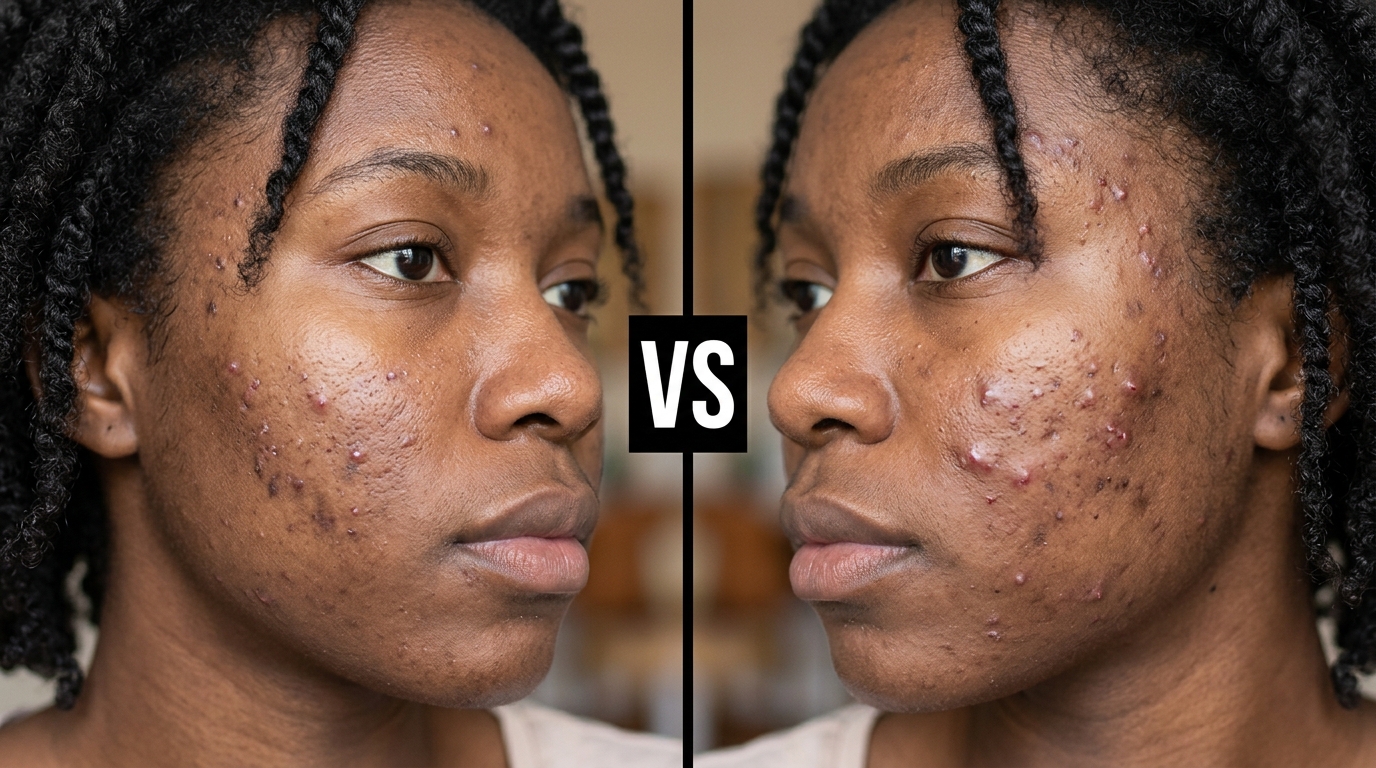
Skin purging happens in the areas where you normally break out and clears up faster, while a product-triggered breakout often appears in new areas and keeps getting worse the longer you use the product.
Let’s talk about it.
1. Where It Appears
Purging skin almost always shows up in areas where you already tend to break out like your chin, forehead, jawline, nose.
If new pimples are appearing in places you’ve never broken out before like your cheeks, neck, around your hairline, that’s more likely a product reaction, not a purge.
2. How Fast It Moves
A skin purging cycle moves fast.
With skin purging, each pimple usually disappears faster than normal, often within 2–3 days, while a product-triggered breakout tends to last longer and keeps getting worse instead of clearing on its own.
3. What Triggered It
Skin purging is only triggered by ingredients that actively speed up cell turnover.
Purging cannot be caused by a new oil, a new sunscreen, a new body wash, or a new cleanser, those products don’t affect your skin’s renewal rate.
If you introduced something like the Garnier Vitamin C Dark Spot Corrector Serum or the Anua Niacinamide 10% + Tranexamic and your skin flared, that’s most likely purging.
Skin Purging vs Breakout: A Quick Glance
Skin Purging |
Breakout/Reaction |
|
| Location | Existing breakout zones | Anywhere, including new areas |
| Trigger | Cell-turnover actives | Pore-cloggers, irritants, allergens |
| Timeline | Clears in 4–6 weeks | Persists or worsens |
| Individual spots | Come and go quickly | Linger longer |
| After it ends | Skin improves significantly | No improvement without removing product |
How Long Does Skin Purging Last?
Most cases of skin purging resolve within four to six weeks.
For some people, especially those using potent retinoids or starting actives for the first time, the full purge cycle can stretch to eight weeks.
But beyond eight weeks, something else is likely going on.
The timeline also depends on:
- How strong the active is. A low-dose Estelin Retinol Serum will generally cause a shorter, milder purge than a prescription-strength tretinoin formula.
- How congested your skin already was. The more clogged pores and hidden pimples you had beneath the surface, the more there is to purge.
- How often you use the product. Starting slowly, such as every other night instead of every night, usually makes purging milder.
- How well you care for your skin barrier. Keeping your skin moisturized and healthy can reduce how intense purging feels and help your skin recover more comfortably.
If you’re eight weeks in and nothing has improved, stop using the product.
That’s either the wrong product for your skin type, or something else is triggering breakouts entirely like your diet, hormones, your current moisturiser, or even your pillowcase.
Is Skin Purging Good?
Yes, skin purging is usually a good sign if it starts after using a product known to cause purging and clears up within the expected timeframe.
It means your skin is getting rid of clogged pores and hidden pimples faster than usual, which can lead to clearer skin over time.
Many people notice smoother skin, fewer clogged pores, and a more even skin tone once the purge is over.
If you already have acne, purging can still be normal.
However, skin purging won’t treat the underlying cause of acne, such as hormonal breakouts, so those may need additional treatment.
You can learn more about the difference in the guide to identifying hormonal acne.
Skin Purging Before and After: What to Realistically Expect
Here’s a general picture of what most people experience:
- Weeks 1–2: This is usually the worst stage. You may notice more pimples at once, rougher skin, and existing spots coming to a head faster than usual.
- Weeks 3–4: Your skin starts to calm down. Fewer new pimples appear, and existing ones begin to clear more quickly.
- Weeks 5–8: Most purging is over. Your skin looks smoother, clogged pores are reduced, and you should start seeing clearer, more even-looking skin.
A normal purge shouldn’t cause painful cysts, severe redness, swelling, itching, or breakouts in places you don’t usually get them.
If you notice any of these, stop using the product and see a dermatologist.
How to Support Your Skin Through a Purge
You can make skin purging easier by keeping your routine simple, using a gentle cleanser, moisturizing well, wearing sunscreen every day, adding a soothing toner or essence, and double cleansing at night.
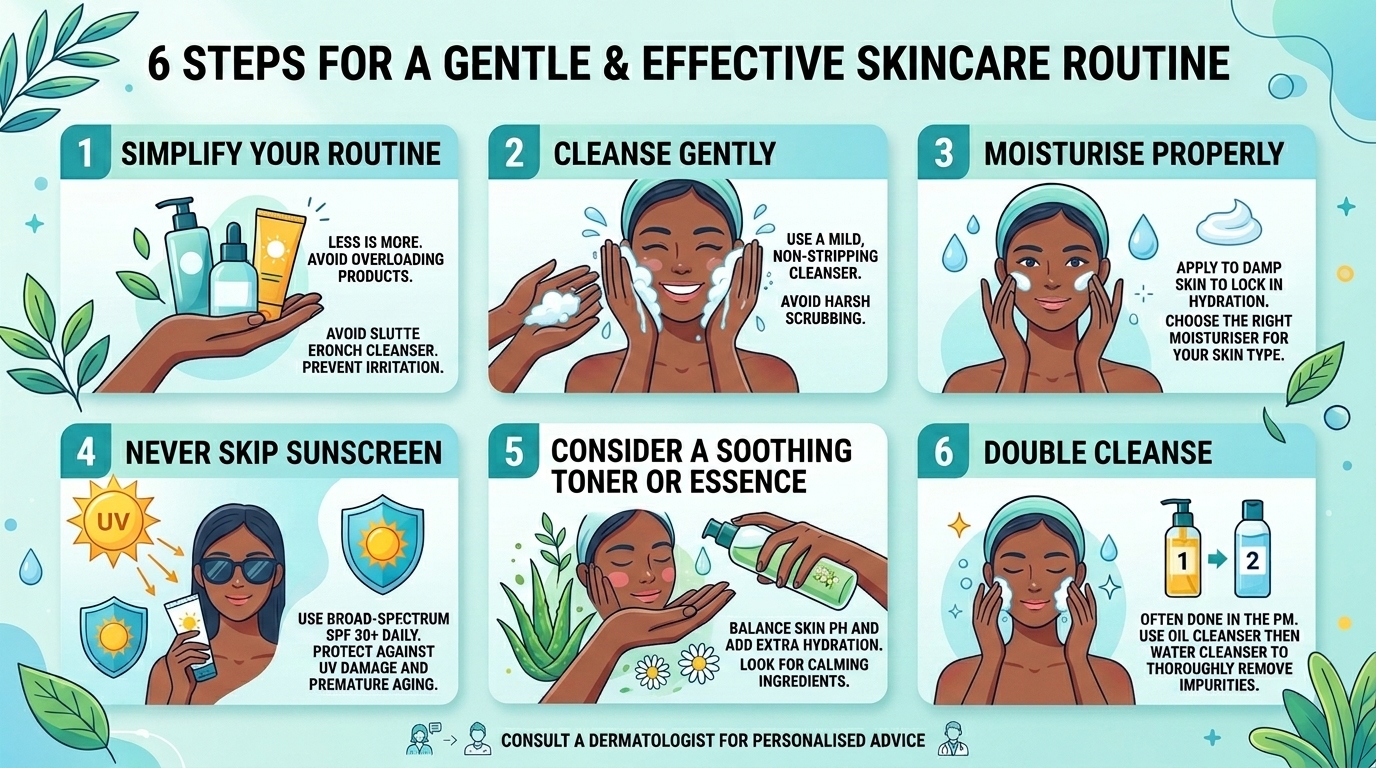
1. Simplify Your Routine
Drop any other actives while you’re purging.
If you’ve started a new retinoid, pull back on your acids, your vitamin C, your exfoliating toners, all of it.
Let the new ingredient be the only variable.
Use this blog – acids in your skincare routine as a layering guide for when you’re ready to reintroduce them.
2. Cleanse Gently
This is not the time for stripping cleansers.
The CeraVe Acne Foaming Cream Cleanser and the CeraVe Acne Control Cleanser are both excellent during a purge.
They address congestion without destroying your skin barrier.
Avoid anything with alcohol, heavy fragrance, or gritty physical exfoliants while your skin is reacting.
The guide to finding the best acne face wash for sensitive skin is worth reading if you’re unsure where to start.
3. Moisturise Properly
Your barrier needs protection during a purge.
A rich, non-comedogenic moisturiser makes a tangible difference.
The Purito Mighty Bamboo Panthenol Cream is a solid option. It’s calming, hydrating, and won’t add more congestion to the mix.
The Im From Rice Cream and the Mixsoon Bifida Cream are also barrier-friendly choices.
For more recommendations, check out the best moisturizers for acne-prone skin.
4. Never Skip Sunscreen
Active ingredients make your skin significantly more sun-sensitive.
If you’re not protecting your skin every single morning, you’re undoing a lot of the work your actives are doing and increasing the risk of post-inflammatory hyperpigmentation from your purge spots.
The Bondi Sands Hydra UV Protect SPF 50 Sunscreen Spray is a lightweight daily option, and the La Roche-Posay Anthelios Shaka Spray is excellent if you prefer a spray option.
5. Consider a Soothing Toner or Essence
While you’re scaling back actives, a hydrating, non-active toner can maintain moisture without disrupting the purge.
The Anua Peach 77 Niacin Essence Toner is a gentle option, and the Medicube Age-R Glutathione Glow Toner works well for those looking to address uneven tone without adding more acids into the mix.
See the top hydration mists and toners for more.
6. Double Cleanse
Double cleansing helps clear the day’s residue without over-stripping.
The complete guide to double cleansing for healthy skin walks you through exactly how to do it correctly without aggravating purging skin.
Beauty By Daz Tip: Micellar water like Bioderma Sensibio H2O works well as a first-cleanse step.
Dealing With Dark Spots After a Purge: What to Do
Once your skin has fully cleared, you can address those marks directly with targeted ingredients:
The Anua Niacinamide 10% + Tranexamic combination is particularly effective for PIH.
The Beauty of Joseon Glow Review covers another crowd-favourite for post-breakout marks.
For a full guide, the best face serums for dark spots is an excellent resource, as is the roundup of serums for dark spots in Nigeria.
The Aziderm Azelaic Acid 20% Gel is also worth considering.
Azelaic acid works on both active breakouts and the marks they leave, making it a dual-purpose option for post-purge care.
The truth is, the most common skin purging before and after concerns isn’t the breakouts themselves, it’s the marks they leave.
Post-inflammatory hyperpigmentation (PIH) from purge spots can linger for weeks or months.
Frequently Asked Questions About Skin Purging
1. How Long Will Skin Purging Last?
Skin purging typically lasts four to eight weeks from the point you introduce the active ingredient causing it. For most people, the peak is in weeks one and two, with gradual improvement from week three onwards.
2. Is Purging Good For Your Skin?
Yes, purging skin is generally a positive sign that your active ingredient is working as intended, accelerating cell turnover and clearing subclinical congestion faster than your skin would on its own.
3. How Do I Know My Skin Is Purging?
Your skin is most likely purging if: you recently introduced a cell-turnover active (retinoid, AHA, BHA, vitamin C); the breakouts are showing up in your usual problem zones, not new ones; individual spots are coming and going quickly; and the overall situation is gradually improving after the first two weeks.
4. What Does Purging Do To Skin?
Purging temporarily brings existing congestion to the surface of the skin faster than they would naturally emerge. This happens because active ingredients accelerate keratinocyte turnover, which means the skin sheds faster, and anything sitting beneath the surface gets pushed up more quickly.
5. What Should I Actually Use During a Purge?
The simplest purge routine: a gentle cleanser (the CeraVe Acne Control Cleanser or the Isispharma Teen Derm Gel work well for acne-prone skin), a barrier-supportive moisturiser, daily SPF, and nothing else unless specifically recommended. The guide to how to apply serum on face is helpful here. During a purge, less is genuinely more.
6. Is Fungal Acne the Same as Purging Skin?
No, fungal acne (pityrosporum folliculitis) is not the same as skin purging and will not respond to the same approach. It requires antifungal treatment, not patience.
The Bottom Line: Skin Purging in 60 Seconds
Skin purging is temporary, manageable, and usually a sign you’ve found an active that actually works.
The skin purging before and after results are worth pushing through, but only if you’re supporting your skin properly while it adjusts.
Keep your routine minimal. Protect your barrier. Wear your sunscreen and don’t pick your skin.
And if you’re genuinely struggling to tell whether what you’re experiencing is purging skin or a product reaction, book an appointment with Beauty By Daz :))