

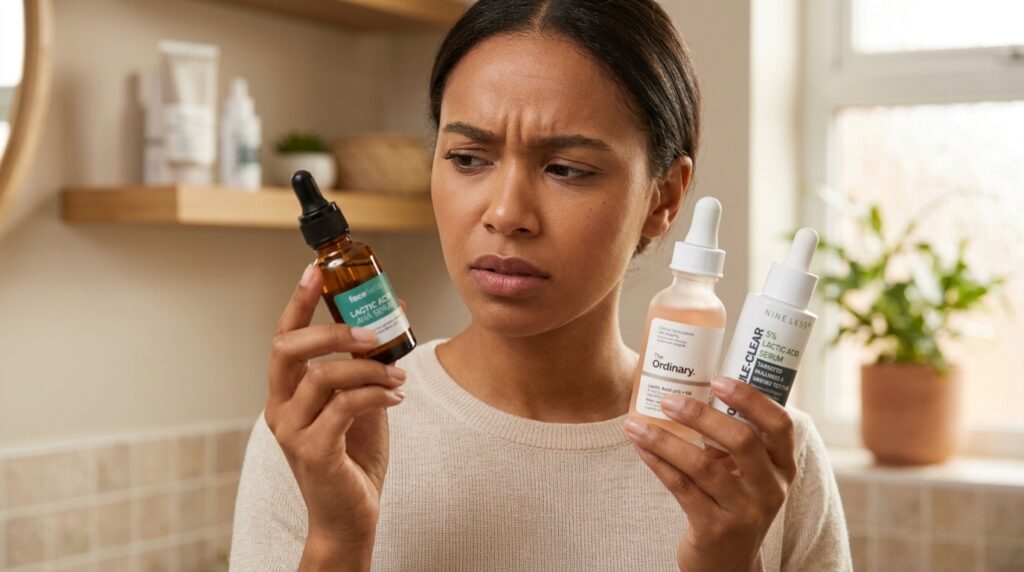
Should you use The Ordinary Lactic Acid Serum 5% + HA or The Ordinary Lactic Acid 10% + HA?
“Wait, aren’t they both lactic acids?”
Yes & no.
There’s even a difference between 3%, 5%, and 10% lactic acid serums and the best one for you depends on your skin type, sensitivity, and skincare goals.
That’s why this guide from Beauty By Daz breaks down everything you need to know about lactic acid serums.
Let’s begin.
TL;DR: Everything You Need to Know About Lactic Acid Serum
- A lactic acid serum is a gentle alpha hydroxy acid (AHA) exfoliant that helps smooth rough skin texture, fade dark spots, and improve hydration at the same time.
- If you’re new to lactic acid, it is best to start with a serum containing 3–5% lactic acid. More experienced users who already tolerate chemical exfoliants can consider formulas with up to 10% strength for stronger exfoliating effects.
- Start using a lactic acid serum two to three nights per week. If your skin responds well without irritation, you can gradually increase usage until it becomes part of your nightly routine.
- Some of the best lactic acid serums available at Beauty By Daz include Facefacts Glow & Resurface 3%, The Ordinary Lactic Acid 5%, NINELESS 5% Lactic Acid + Peptides, and The Ordinary Lactic Acid 10%.
- Prices typically range from ₦3,200 to ₦17,950, and Beauty By Daz offers original, authentic products with nationwide delivery across Nigeria.
- Using sunscreen daily is essential when using lactic acid or any other AHA because exfoliation makes your skin more sensitive to UV damage. Without proper sun protection, you may end up worsening the very dark spots you’re trying to fade.
What Is a Lactic Acid Serum?
Lactic acid serum is a chemical exfoliant that gently removes dead skin so your skin becomes smoother brighter and moisturized. Plus, it helps your cleansers, toners, moisturisers and sunscreen work better.
It does this by loosening the “glue” that holds dead skin cells together so they naturally shed off and reveal fresh new skin underneath.
Fun fact: lactic acid is actually one of the ingredients your skin makes naturally, so when you apply a lactic acid serum, you’re not introducing something strange; you’re adding something your skin already loves.
That’s part of why it’s the AHA (Alpha Hydroxy Acid; a group of water-soluble acids naturally derived from fruits, milk, and sugar cane) most dermatologists recommend for beginners and for sensitive skin.
5 Benefits of Using Lactic Acid Serum
Lactic acid serum gives smoother skin texture, brighter and more even tone, faded dark spots and post-acne marks, fewer clogged pores, softer fine lines, and deeper hydration. Most people see visible results within 2-4 weeks of consistent use, with bigger changes around 8-12 weeks.
More gist? Read this:
1. Lactic Acid Fades Hyperpigmentation and Dark Spots
It speeds up how fast your skin renews itself, so old dark marks rise up and shed off faster than usual.
2. It Smooths Rough Patches and Bumpy Texture
Dead skin sits on top of your face and makes it feel rough. Lactic acid sweeps it off so you feel smooth.
3. Lactic Acid Serums Unclog Pores Safely
It only works on the top of your skin, not deep inside. So it clears blackheads without burning or making you flake.
4. It Boosts Absorption of Your Other Products
Think of dead skin as a closed door. Lactic acid opens it so your serums and creams can actually get in and work.
5. Lactic Acid Hydrates While It Exfoliates
Most acids dry your skin out. This one is different. It pulls water into your skin while it cleans, so you feel plump, not tight.
Best Lactic Acid Serums in 2026: Dermatologist Approved
The best lactic acid serums you can buy in Nigeria right now are the Facefacts Glow & Resurface Lactic Acid Serum 3%, The Ordinary Lactic Acid 5% + HA, the NINELESS Molecule-Clear 5% Lactic Acid Serum, and The Ordinary Lactic Acid 10% + HA. All four are available at Beauty By Daz, 100% authentic, and shipped nationwide.
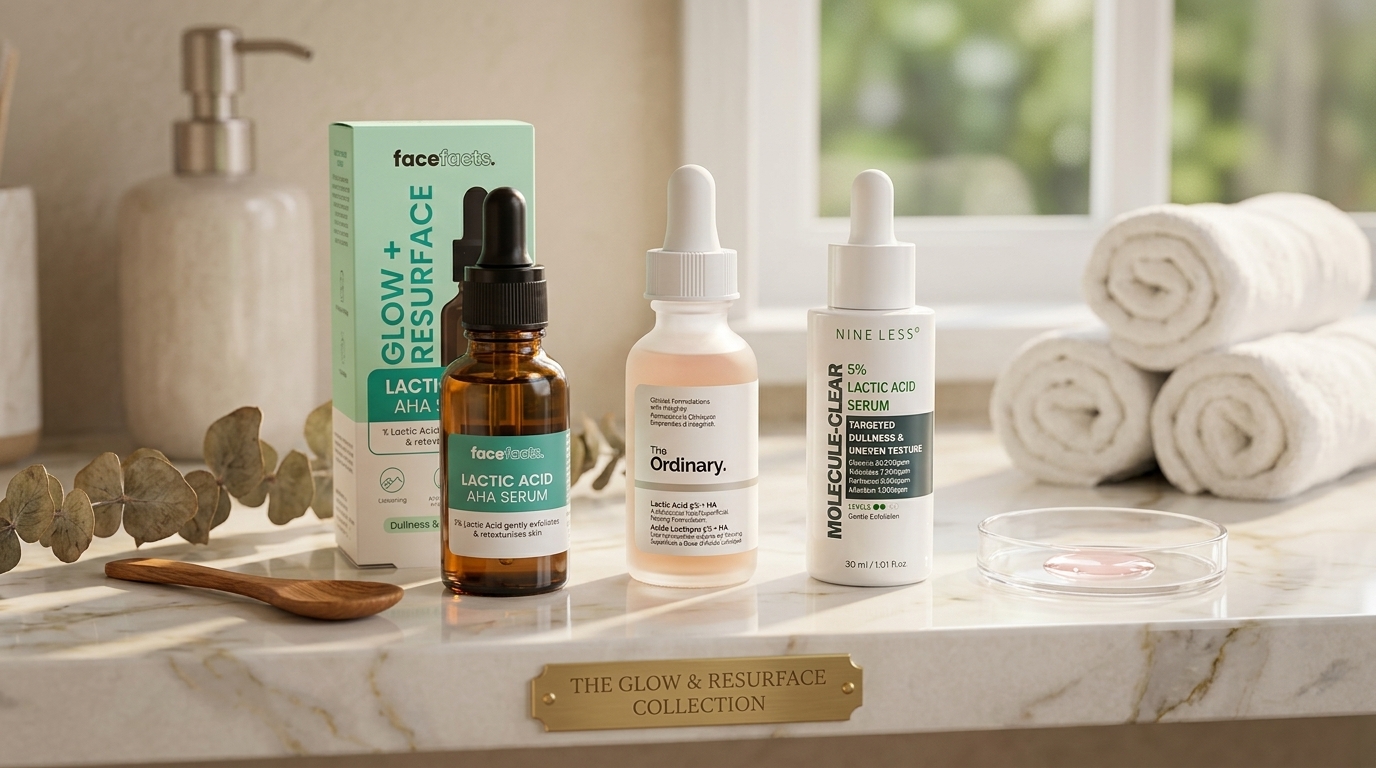
However, it depends your skin’s experience level with actives and your specific concerns. Beginners and sensitive skin do best with 3-5% formulas; advanced users with deep pigmentation can handle 10%.
1. Facefacts Glow & Resurface Lactic Acid Serum (3%)
The Facefacts Glow & Resurface Lactic Acid Serum is the best beginner-friendly lactic acid serum because it pairs 3% lactic acid with calming aloe vera and vitamin C-rich peach extract, gently buffing surface dullness without overwhelming your barrier. It’s perfect for first-timers, sensitive skin, or anyone who reacts badly to stronger acids.
You can shop the original Facefacts Glow & Resurface Lactic Acid Serum from Beauty By Daz.
2. The Ordinary Lactic Acid 5% + HA
The Ordinary Lactic Acid 5% + HA is the most popular intermediate option because the 5% concentration is strong enough to tackle texture and mild pigmentation, but the hyaluronic acid and Tasmanian pepperberry inside keep it from being harsh.
It’s great for combination skin and people moving up from 3%.
One thing though: The Ordinary is one of the most counterfeited brands in Nigeria. Get the original The Ordinary Lactic Acid 5% from Beauty By Daz so you’re not putting a watered-down version on your face.
3. NINELESS Molecule-Clear 5% Lactic Acid Serum
The NINELESS Molecule-Clear 5% Lactic Acid Serum stands out because it blends 5% lactic acid with 7 peptides (including Copper Tripeptide-1), trehalose, and panthenol, so it resurfaces AND firms while keeping moisture locked in.
This is the best face serum for oily or acne-prone skin that also wants anti-ageing benefits.
You can get the original NINELESS Molecule-Clear 5% Lactic Acid Serum from Beauty By Daz, shipped directly from Korea.
4. The Ordinary Lactic Acid 10% + HA
The Ordinary Lactic Acid 10% + HA is the highest-strength option for experienced users dealing with dark spots, deep texture issues, or post-acne marks. The pH sits at 3.8 (the sweet spot for AHA effectiveness), so you’ll see results quickly.
Beauty By Daz Tip: Only step up to 10% after your skin has happily tolerated 5% for at least 2 months. Pushing your skin too fast is how dark spots start.
How to Add a Lactic Acid Serum to Your Skincare Routine
Apply your lactic acid serum at night on clean, dry skin, after toner and before moisturiser, 2-3 nights per week to start, then build up to nightly use over 3-4 weeks if your skin tolerates it. Always follow with a sunscreen of SPF 30 or higher the next morning.
Here’s the exact step-by-step:
Your Lactic Acid Serum Night Routine:
- Double cleanse (especially if you wore sunscreen or makeup).
- Apply hydrating toner like the The Hada Labo Gokujyun Hyaluronic Acid Lotion and let it absorb.
- Wait until your skin is fully dry. (This part matters; damp skin = more irritation.)
- Press 3-4 drops of your lactic acid serum into your face and neck.
- Wait 2-3 minutes, then layer a hydrating moisturiser like the Simple Hydrating Moisturizer or CeraVe Moisturising Cream.
- Lock everything in with a face oil if your skin is dry.
Your Lactic Acid Serum Morning Routine:
- Start with a gentle single cleanse
- Add a hydrating serum like the Anua 8 hyaluronic acid and moisturising gel.
- Layer it with a moisturiser. We have an exhaustive guide on how to layer your skincare products for maximum results.
- Apply sunscreen. Every. Single. Day. Don’t even play about this.
Please, do NOT use lactic acid with retinol on the same night. Don’t stack it with other acids either.
How Much Does a Lactic Acid Serum Cost in Nigeria?
Lactic acid serum pricing in Nigeria ranges from ₦3,200 to ₦24,600 at Beauty By Daz, depending on the brand and concentration.

Here’s the current pricing breakdown for 2026:
Lactic Acid Serum |
Strength |
Price at Beauty By Daz (₦) |
|---|---|---|
| Facefacts Glow & Resurface | 3% | ₦3,200 |
| The Ordinary Lactic Acid 5% + HA | 5% | ₦8,350 |
| NINELESS Molecule-Clear 5% | 5% + Peptides | ₦9,500 |
| The Ordinary Lactic Acid 10% + HA | 10% | ₦17,950 |
Truth is, this is the best pricing you’ll find in the market.
Side Effects of Lactic Acid Serum (And How to Avoid Them)
The most common side effects of lactic acid serum are mild tingling, dryness, slight peeling, and increased sun sensitivity, but these usually settle within the first 1-2 weeks as your skin adjusts. Serious irritation, burning, persistent redness, or dark patches mean you’re overusing it or using too high a strength.
Here’s how to avoid the worst of it:
- Start slow. 2 nights a week max for the first 3 weeks.
- Patch test first. Behind your ear or jawline for 48 hours.
- Never skip sunscreen. Acids make your skin up to 50% more sun-sensitive.
- Don’t double up on actives. No retinol, no glycolic, no salicylic on the same night. Okay?
- Stop if your skin barrier is broken. Healing first, exfoliating later.
If this is your first time doing anything skincare, it’s best to start with a beginner skincare routine.
Who Should (And Shouldn’t) Use Lactic Acid Serum?
Lactic acid serum is right for you if you have dull, uneven, congested, or texture-prone skin, dark spots from old acne, or fine lines you want to soften. You should skip it if you have a compromised barrier, active eczema or rosacea, sunburn, or if you’re already using strong prescription retinoids.
Use a lactic acid serum if you:
- Have hyperpigmentation or post-inflammatory dark marks (very common on Nigerian skin)
- Deal with rough texture, “strawberry skin,” or clogged pores
- Want to brighten dullness from sun exposure and pollution
- Have oily or combination skin that gets congested easily
- Are starting your first chemical exfoliant journey
Skip it (for now) if you:
- Have an actively damaged skin barrier (red, stinging, peeling)
- Are on prescription tretinoin like the Aret tretinoin gel (we actually have a review)
- Have open breakouts, sunburn, or fresh wounds
- Have rosacea or eczema flaring up
- Don’t wear sunscreen daily (this is the deal-breaker, honestly)
Not sure where you fall? Book a skin consultation with Beauty By Daz, and our team will tell you.
Beauty By Daz Reviews: Real Results From Lactic Acid Serum Users
Yes, a lactic acid serum genuinely works. But instead of taking our word for it, here’s what Beauty By Daz customers had to say after using one consistently.
“I’ve struggled with dark marks on my cheeks for YEARS. Tried everything. Started using The Ordinary 5% lactic acid serum 3 nights a week and by week 6, my husband actually noticed. The texture on my forehead is also gone. Just stay consistent.” — Tomi A., Lagos
“I have super oily, congested skin and I was scared of acids because of dark spots. The Facefacts 3% was the perfect starting point for me. Used it for 2 months, then moved to NINELESS 5%. My pores look smaller, my makeup sits better, and I haven’t had a single new breakout in weeks.” — Bukola E., Abuja
“The peptides in the NINELESS serum are no joke. I’m 38 and the fine lines around my mouth softened in about 5 weeks. Skin feels firmer too.” — Adaeze N., Port Harcourt
What these stories tell us: a good lactic acid serum works, but only if you stick with it and pair it with sunscreen.
Frequently Asked Questions About Lactic Acid Serum
1. What Does Lactic Acid Face Serum Do?
Lactic acid face serum exfoliates dead skin cells, fades dark spots, smooths rough texture, and pulls moisture into your skin all at once. Most people see brighter, softer skin within 2-4 weeks of using it 2-3 nights a week.
2. Which Is Better, Niacinamide or Lactic Acid?
Neither is “better,” they do different jobs. Niacinamide calms redness, controls oil, and strengthens your barrier. Lactic acid exfoliates and fades dark marks. The smart move is using both, niacinamide in the morning and a lactic acid serum from Beauty By Daz at night.
3. Will Lactic Acid Lighten Skin?
No, lactic acid will not bleach or lighten your natural skin tone. It only fades dark spots, post-acne marks, and sun damage, restoring your skin to its true even tone underneath. If anyone tells you otherwise, walk away.
4. Can I Layer Lactic Acid With Tretinoin?
No, do not layer lactic acid with tretinoin on the same night. Both are strong actives and combining them will likely burn, peel, or dark-spot your skin. Alternate them on different nights, or book a skin consultation with Beauty By Daz to build a safe routine.
5. Where Can I Buy Authentic Lactic Acid Serum in Nigeria?
Beauty By Daz is Nigeria’s most trusted place to buy authentic lactic acid serums. We source directly from manufacturers, deliver nationwide, and you can walk into our store at 146 Ogudu Road, Lagos for in-person consultations.
6. Does Beauty By Daz Deliver Lactic Acid Serums Outside Lagos?
Yes, Beauty By Daz delivers authentic lactic acid serums to all 36 states in Nigeria. Orders are processed quickly, packed discreetly, and shipped with tracking so you know exactly when your serum will arrive.
So…Should You Add Lactic Acid to Your Routine?
Yes, you should absolutely add a lactic acid serum to your routine in 2026, BUT only if you pick the right strength for your skin level, pair it with daily sunscreen, and give it 8-12 weeks of consistent use.
And if you need help picking the right one (or want a custom routine built around it), shop our full lactic acid serum range or book a free skin consultation with Beauty By Daz today. You can also call or WhatsApp us, or walk into the store at 146 Ogudu Road, Ogudu, Lagos.
See you in the next post :))
