

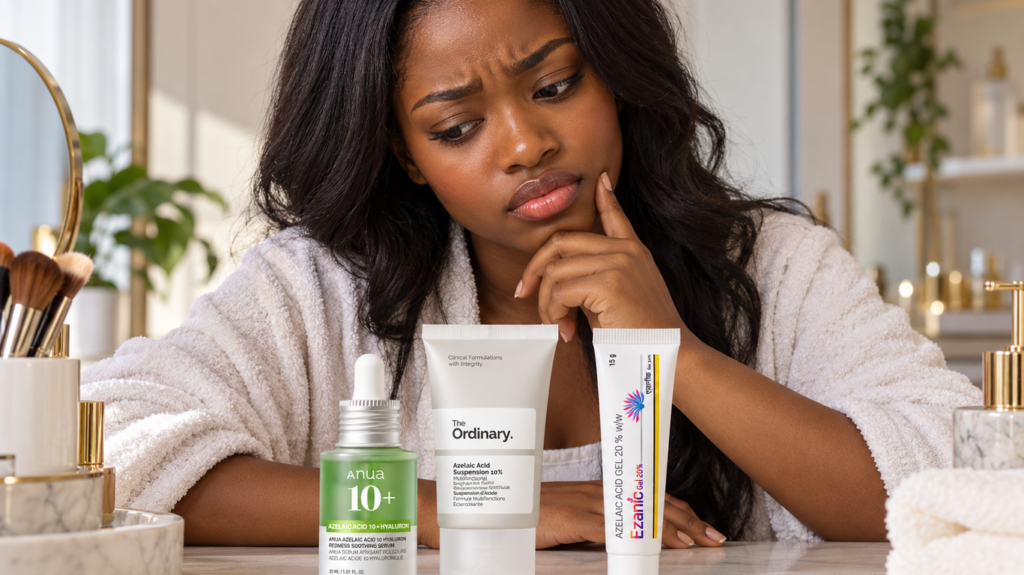
If you’ve been told to “try azelaic acid” for breakouts, post-acne marks, redness, or uneven skin tone, you probably have a few questions.
Which strength should you choose? Is it safe for sensitive skin? Will it lighten your skin?
These are some of the questions we hear most often at Beauty By Daz, so we put this guide together. It covers what azelaic acid does, who it suits, how to use it, what to expect, and which products you can buy in Nigeria.
Let’s get into it.
TL;DR: What You Need to Know About Azelaic Acid
- Azelaic acid is a gentle skincare acid that helps with acne, post-acne dark spots, redness and uneven skin tone.
- The job of Azelaic acid is to keep pores clear, reduce acne-causing bacteria, calm inflammation, and slow excess pigment, without bleaching your natural skin tone.
- Azelaic 10% is a sensible starting point for most people; 15% and 20% are stronger, but not automatically better.
- Breakouts often start improving within about four weeks of using Azelaic acid, while dark spots take two to three months or more.
- Mild tingling or dryness is a common side effect of using Azelaic acid; stop if you get severe burning, swelling or peeling.
- Some of the best Azelaic acid products available at Beauty By Daz include The Ordinary Azelaic Acid 10%, Nineless A-Control 10% Azelaic Acid Serum, Anua Azelaic Acid 10% + Hyaluron Redness Soothing Serum, Ezanic Azelaic Acid Gel, and Aziderm Azelaic Acid 20% Gel.
- The prices of Azelaic acid products at Beauty By Daz range from ₦6,500 to ₦18,850.
What Is Azelaic Acid?
Azelaic acid is a naturally occurring acid found in grains such as barley, wheat, and rye, and in skincare it helps treat acne, rosacea, and dark spots by keeping pores clear, reducing acne-causing bacteria, calming inflammation and slowing down the extra pigment that causes uneven patches.
It’s a little different from the acids you might already know. It isn’t an AHA like glycolic acid or a BHA like salicylic acid, and it tends to be gentler than both.
One thing to keep in mind: azelaic acid doesn’t increase your skin’s sensitivity to sunlight, and it doesn’t bleach your natural skin colour.
However, you’ll still need sunscreen, though, and we’ll explain why further down.
What Are the Benefits of Using Azelaic Acid?
The benefits of using azelaic acid include reducing breakouts, helping to lighten dark spots left by acne, calming redness and improving uneven skin tone over time.
And because Azelaic acid is gentler than many acne treatments, it’s often a good fit for sensitive skin and for darker skin tones who tend to develop dark spots after pimples heal.
Here’s the whole tea:
1. Azelaic Acid Helps Fight Acne and Breakouts
Azelaic acid helps keep pores clear and reduces acne-causing bacteria, so it works on blackheads and whiteheads as well as red, inflamed spots.
2. It Also Fades Dark Spots and Post-Acne Marks
When a spot heals, the skin can produce extra pigment, leaving a dark mark behind. Azelaic acid slows that extra pigment, so marks fade gradually.
For a wider look at your options, see our guide to face serums for dark spots.
3. Azelaic Acid Does Help to Calm Redness and Rosacea
Azelaic acid calms inflammation, which helps reduce redness and small red bumps.
It’s an established treatment for rosacea, but rosacea is a medical condition, so it’s best to have it diagnosed by a doctor or dermatologist before you treat it yourself.
If your breakouts flare along your jaw around the same time each month, our guide to hormonal acne can help you work out what’s behind them.
4. It Improves Uneven Skin Tone
By evening out patchy pigmentation and calming redness, azelaic acid can give your overall skin tone a more even look over time.
Which Azelaic Acid Strength Should You Use: 10%, 15%, or 20%?
Most people should start with 10% azelaic acid, especially if they’re new to it or have sensitive skin.
15%-20% azelaic acid suits stubborn acne, rosacea, or post-acne marks that haven’t improved after a few months of using the 10% azelaic acid.
| Strength | Often used for | What to know |
| 10% | Mild acne, redness and dark spots left by pimples. A possible starting point for beginners. | Commonly found in skincare serums and creams. It may be a good starting option |
| 15% | Rosacea and acne | Often comes as a gel and it’s a prescription treatment. Whether you need a prescription depends on the country where you live. |
| 20% | Acne, stubborn post-acne marks and melasma | Available as a cream or gel. It may cause tingling, dryness or irritation when you first start using it. A prescription is also required |
Who Should Use Azelaic Acid, and Who Should Not?
Azelaic acid can be right for you if you have oily, acne-prone, sensitive and darker skin, but you should be cautious if you’re allergic to any ingredient in the product, your skin is broken or irritated, or you have asthma.
You will benefit from Azelaic Acid if you:
- Find stronger acne treatments too harsh for your skin.
- Your skin is sensitive and reacts to many exfoliating acids.
- Need one ingredient that works on breakouts and dark spots.
- You’re pregnant or breastfeeding and looking for gentler options.
You should be cautious if you:
- Reacted to azelaic acid before, or to an ingredient such as propylene glycol.
- Your face is peeling, burning or raw, perhaps from over-exfoliating or bleaching creams; let it heal first.
- Have eczema or very reactive skin; azelaic acid can still work for you, but patch test and go slowly.
- Have Asthma. If you notice any change in your breathing, stop and speak to your doctor.
Still unsure whether azelaic acid suits your skin? You can book a skin consultation with Beauty By Daz and talk it through before you buy anything.
How Do You Use Azelaic Acid Effectively?
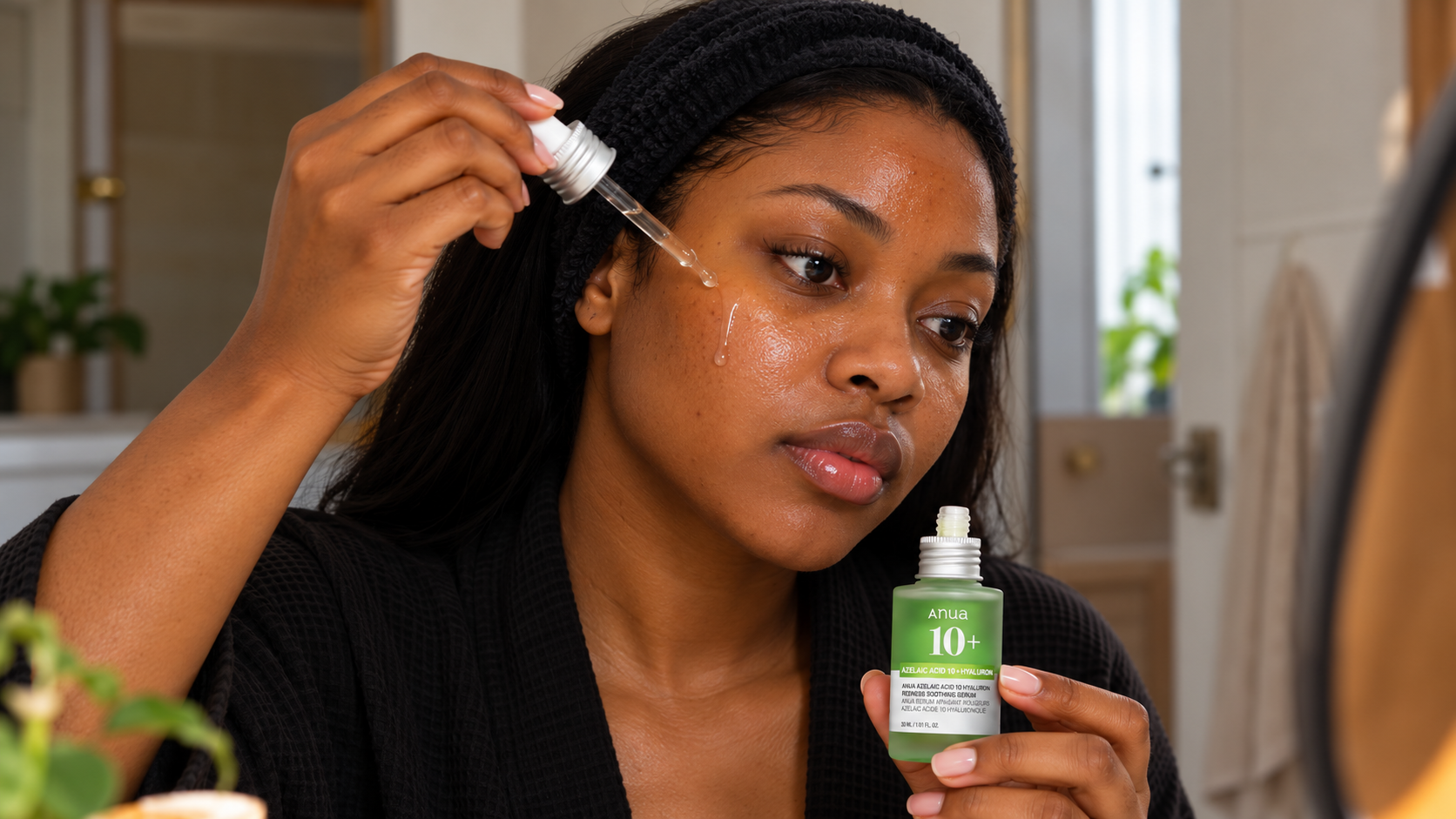
To use azelaic acid effectively, cleanse gently, apply a thin layer to completely dry skin following your product’s directions, moisturise, and wear sunscreen every morning.
Follow these steps below:
- Do a patch test: Apply a little along your jawline for two or three evenings. If there’s no burning, swelling, or itching, you’re ready to use it on your face.
- Cleanse gently: A mild, non-stripping cleanser from our cleansers range is all you need.
- Pat your skin completely dry: Azelaic acid tends to sting more on damp skin.
- Apply a thin layer: Use a pea-sized amount of azelaic acid and spread it over the areas where you break out or have spots. Keep it away from your eyes, lips and the inside of your nose.
- Wait a few minutes for it to absorb before applying your next layer: If it starts to come off when you apply another product, check our guide on how to layer skincare products.
- Moisturise.Moisturise. Moisturise: A simple moisturiser from our moisturiser range eases dryness. If you have Oily skin, see the best face creams for oily skin in Nigeria for lighter options.
- Wear sunscreen every morning. Choose a broad-spectrum sunscreen from our sunscreen range. Azelaic acid doesn’t make you burn more easily, but sun exposure darkens the very marks you’re trying to fade.
P.S. You may start to see an improvement in breakouts within about four weeks, with results continuing to build over a few months of regular use. Dark spots and redness take longer to improve, about two to three months or more.
P.S.S. If you haven’t seen any improvement after about three months, speak to us for other treatment options.
What Ingredients Can You Use With Azelaic Acid?
Azelaic acid works well alongside gentle ingredients like niacinamide, hyaluronic acid, ceramide moisturisers, and sunscreen, and it can also be used with retinoids, vitamin C, exfoliating acids, or benzoyl peroxide, provided you add them one at a time and usually at different times of day.
Skincare ingredients you can use with azelaic acid include:
- Niacinamide: helps with oiliness and uneven tone, and some azelaic acid serums already include it.
- Hyaluronic acid: adds hydration and can make azelaic acid feel more comfortable.
- Ceramide moisturisers: help keep your skin hydrated and protect its natural barrier, reducing dryness and irritation.
Ingredients to use carefully with azelaic acid:
- Retinol or retinoids: let your skin get used to azelaic acid for about four weeks first, then use azelaic acid in the morning and retinol at night. If your retinoid was prescribed, check with your prescriber.
- Vitamin C: if your skin is reactive, use vitamin C in the morning and azelaic acid at night.
- Exfoliating acids (glycolic, lactic, or salicylic): alternate nights rather than layering them together.
- Benzoyl peroxide: both can be drying, so alternate them or use one in the morning and one at night.
- Hydroquinone or other prescription creams: only combine them with a dermatologist’s guidance.
Thinking of adding retinol later? Read our Estelin retinol serum review first. If you’d rather add vitamin C, our Beauty Formulas Vitamin C Serum review is a good place to start.
The safest rule is simple: introduce one new active at a time and wait about two weeks before adding the next. If your skin reacts, you’ll know exactly why.
Are There Any Side Effects of Using Azelaic Acid?
The most common side effects of azelaic acid are mild tingling, stinging, itching, dryness or slight redness in the first few weeks, which settle as your skin adjusts, but you should stop and seek medical advice if you develop severe redness, peeling, burning, swelling or any worsening of asthma.
So how do you tell the difference between your skin adjusting and a genuine reaction?
Common side effects of Azelaic Acid:
- Tingling or stinging that fades within a few minutes of applying.
- Mild dryness or light flaking.
- Slight pinkness straight after application.
- A few extra spots in your usual breakout areas early on, which settle within about four to six weeks.
Stop using azelaic acid when you:
- Have burning that gets worse each time you apply it.
- Heavy peeling, scaling or raw patches.
- Swelling, hives or intense itching.
- New bumps in areas where you don’t usually break out, especially with itching or swelling.
- Wheezing or worsening asthma.
If something doesn’t feel right, don’t push through it. STOP, let your skin settle and book a skin consultation so we can look at your routine with you.
What Common Mistakes Should You Avoid When Using Azelaic Acid?
The most common azelaic acid mistakes are:
- Doubling up on azelaic acid: Using a 10% serum and a 20% gel together won’t speed things up. Pick one product and give it time.
- Ignoring the product’s directions: Formulas differ. Some suggest a few drops once or twice a day, and some 20% gels say to use them as your dermatologist directs. Read the label before you start.
- Treating the wrong kind of breakout: Small, itchy, same-sized bumps on your forehead, chest, or back may be fungal acne, which needs a different approach.
- Stopping prescribed treatment. If you’ve been prescribed something for your skin, keep using it and ask before swapping or adding products.
- Buying from unverified sellers. Fake or poorly stored products can irritate your skin. Check that the packaging is clearly printed, the seal is intact, and the batch number and expiry date match on the box and tube. If a price seems too good to be true, it probably is.
All of which make irritation or disappointing results more likely.
What Are the Best Azelaic Acid Products to Buy in Nigeria?
The best azelaic acid products to buy in Nigeria at the moment are The Ordinary Azelaic Acid 10%, Nineless A-Control 10% Azelaic Acid Serum, Anua Azelaic Acid 10% + Hyaluron Redness Soothing Serum, Ezanic Azelaic Acid Gel, and Aziderm Azelaic Acid 20% Gel.
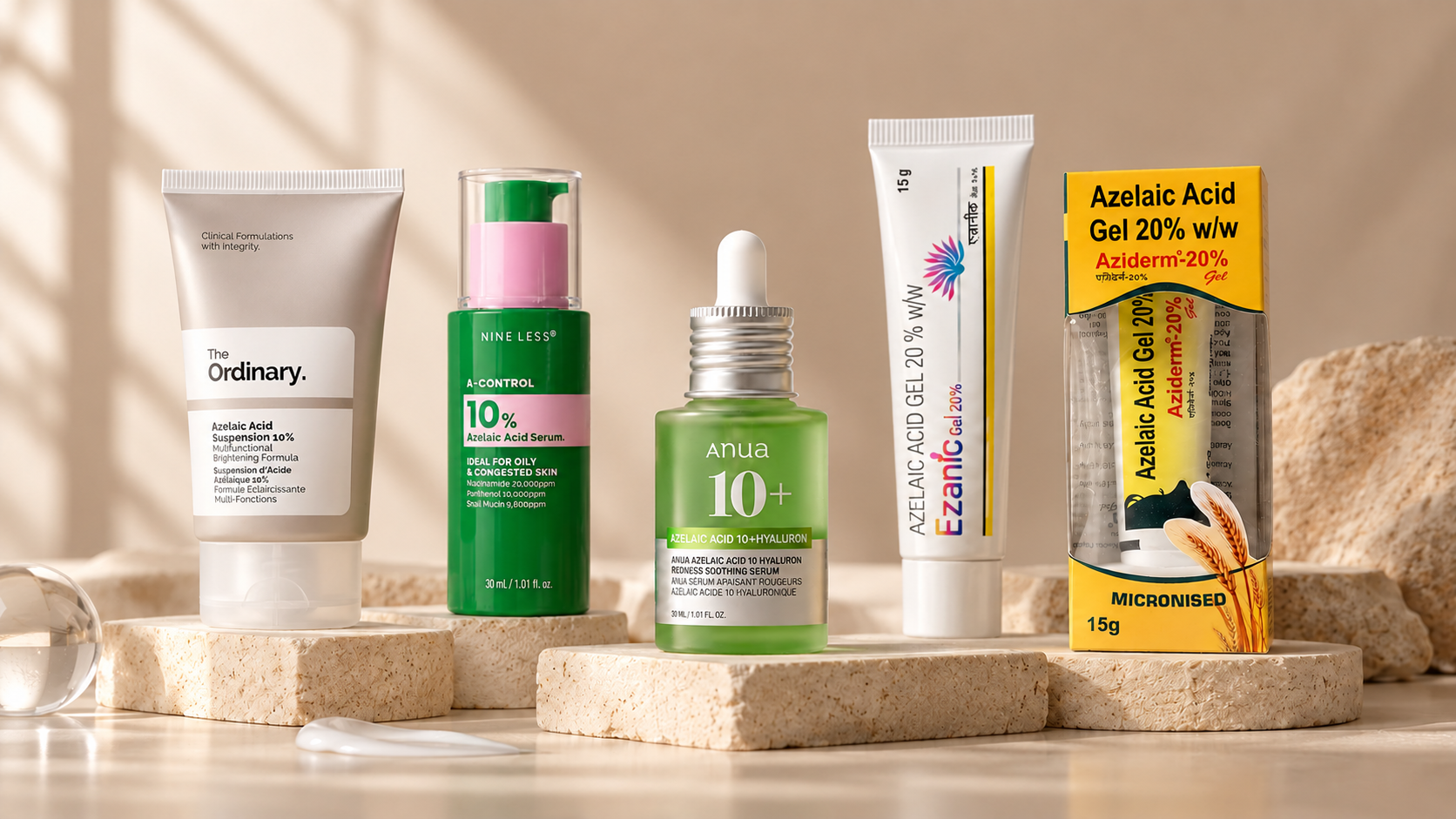
However, the right choice depends on your skin concern, the product’s formula and strength, how well your skin tolerates active ingredients, and your budget. At Beauty By Daz, you can shop all five products, with a guarantee of 100% authenticity and nationwide delivery.
1. The Ordinary Azelaic Acid 10%
The Ordinary’s Azelaic Acid Suspension 10% is a cream-like formula rather than a serum or gel. It’s designed to brighten skin tone, improve the look of uneven texture, and reduce the appearance of blemishes.
The brand describes it as having a lower irritation potential than other direct acids, so it’s gentle enough for daily use.
You can get the original The Ordinary Azelaic Acid at Beauty By Daz.
2. Nineless A-Control 10% Azelaic Acid Serum
Nineless A-Control is a lightweight serum that pairs 10% azelaic acid with niacinamide for extra help with tone and blemishes.
It also contains panthenol and snail secretion filtrate to help skin feel comfortable, plus three forms of hyaluronic acid for hydration.
It may suit you if you prefer a serum texture or want azelaic acid and niacinamide in one step.
So, if you want to try The Nineless A-Control, visit Beauty By Daz.
3. Anua Azelaic Acid 10% + Hyaluron Redness Soothing Serum
Anua’s serum is designed as a daily calming serum, with redness and irritation as its main focus. It combines 10% azelaic acid with hyaluronic acid, which helps keep skin hydrated, so it can feel more comfortable than a single-active formula if your skin tends to feel tight.
The Anua serum may be worth considering if redness and dryness are your main concerns.
You can check for the full details, price, and availability of the Anua Azelaic Acid serum.
4. Ezanic Azelaic Acid Gel 20%
Ezanic is a lightweight 20% azelaic acid gel aimed at acne, dark spots, and uneven tone. It’s designed to calm breakouts and redness, help unclog pores, and gradually fade acne marks.
Customers at Beauty By Daz rate it 4.88 out of 5 from 8 reviews, and our Ezanic azelaic acid gel review covers it in more detail.
It’s no news that getting the original Ezanic Azelaic acid in Nigeria can be a struggle, but not anymore! You can get authentic Ezanic Azelaic Acid Gel at Beauty By Daz.
5. Aziderm Azelaic Acid 20% Gel
Aziderm is a 20% azelaic acid gel that comes in a 15g tube. It’s an option for acne-prone skin, clogged pores and blemishes, and may also help fade dark spots left by pimples and improve uneven skin tone. Of the five products, it’s the most affordable.
You can order Aziderm 20% Azelaic Acid Gel from Beauty By Daz and have it delivered to your location.
How Much Does Azelaic Acid Cost in Nigeria?
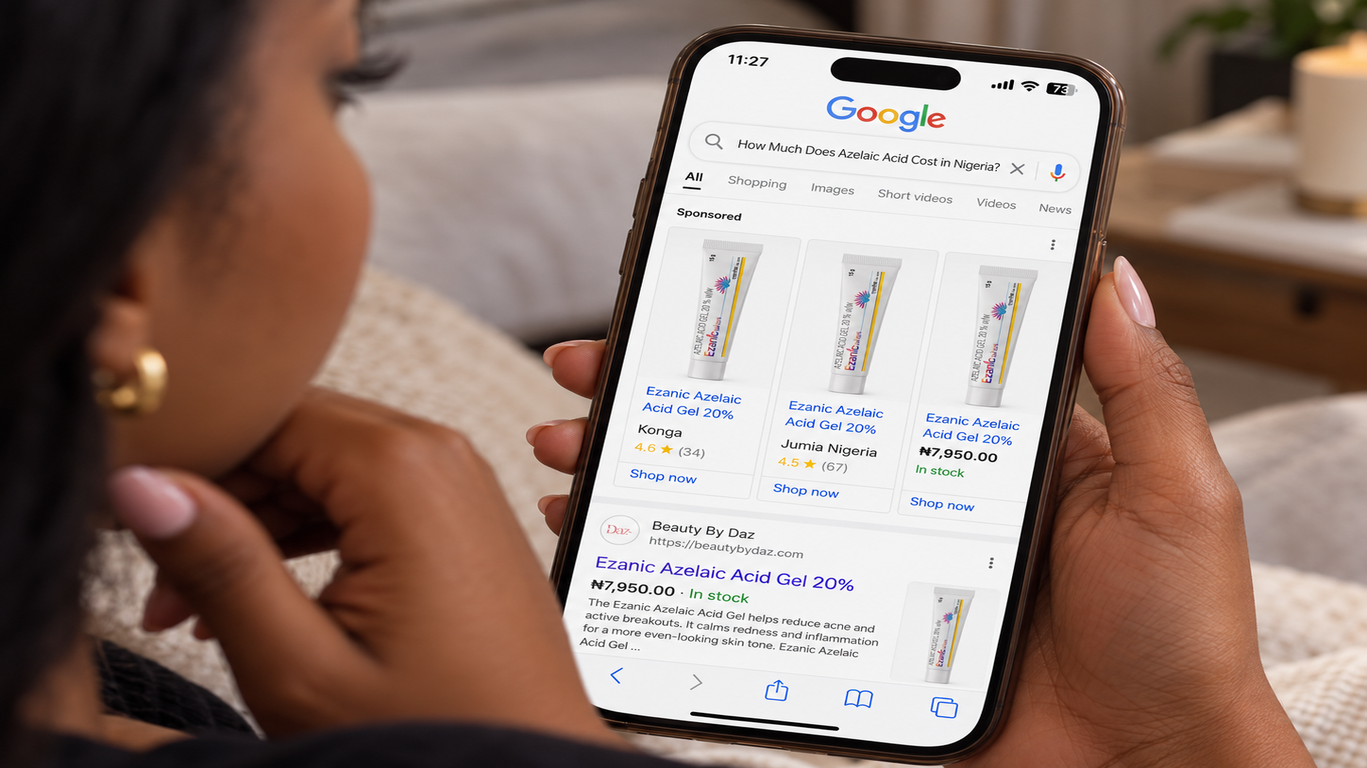
Azelaic acid in Nigeria costs between ₦6,500 and ₦18,850 at Beauty By Daz, with prices depending on the brand, concentration, formulation, and tube or bottle size,
Below is the cost breakdown for [year]:
| Product | Strength | Current price at Beauty By Daz |
| Aziderm Azelaic Acid 20% Gel | 20% | ₦6,500 |
| Ezanic Azelaic Acid Gel | 20% | ₦7,950 |
| The Ordinary Azelaic Acid 10% | 10% | ₦10,500 |
| Nineless A-Control 10% Azelaic Acid Serum | 10% | ₦12,500 |
| Anua Azelaic Acid 10% + Hyaluron Redness Soothing Serum | 10% | ₦18,850 |
At this price, you’re getting great value for your money because every product we stock is sourced from verified suppliers.
Frequently Asked Questions About Azelaic Acid
1. Does Azelaic Acid Lighten or Brighten the Skin?
Azelaic acid brightens your skin by fading dark marks and evening out your tone, but it doesn’t bleach healthy skin. Lighter patches have occasionally been reported, mostly noticeable on darker skin, so stop if you notice any.
2. Can You Use Azelaic Acid Every Day?
Yes, most people can use azelaic acid daily once their skin has adjusted. Start slowly and follow your product’s directions; if you’re unsure, the Beauty By Daz team can help you plan your routine.
3. Is Azelaic Acid Suitable for Sensitive Skin?
Often, yes. It’s one of the gentler skincare acids, and 10% formulas, like The Ordinary Azelaic Acid 10%, Nineless A-Control Azelaic Acid 10%, and Anua Azelaic Acid 10%, which we stock at Beauty By Daz, are the easiest to tolerate. Patch test first and stop if you get burning or swelling.
4. Can Azelaic Acid Help with Hormonal Acne?
It can help with the breakouts and dark spots hormonal acne leaves behind, but it doesn’t change the hormones driving them.
5. Can You Use Azelaic Acid with Retinol?
Yes, but introduce them separately. Let your skin settle on azelaic acid for a few weeks first, then use one in the morning and the other at night.
6. Is Azelaic Acid Better than Salicylic Acid?
Azelaic acid is usually the better choice if your acne leaves dark marks or redness, or if your skin is sensitive, because it helps with breakouts and pigmentation together. Salicylic acid suits very oily skin with lots of blackheads, and some people use both on alternate nights
.
In Summary: Is Azelaic Acid Right for Your Skincare Routine?
Yes, azelaic acid is a good fit for your skincare routine if you deal with breakouts, dark spots, redness or uneven tone and want a gentle treatment you can use long term.
As long as you start slowly, use sunscreen, and give it at least eight to twelve weeks, you’ll be sure to see positive results.
Visit us at 175 Ogudu Road, Ogudu City Mall, Ogudu, or call or WhatsApp us on +234 703 975 6477 if you’d like help picking the right Azelaic Acid serum.
For more help with breakouts and dark spots, read our acne care guides :))