

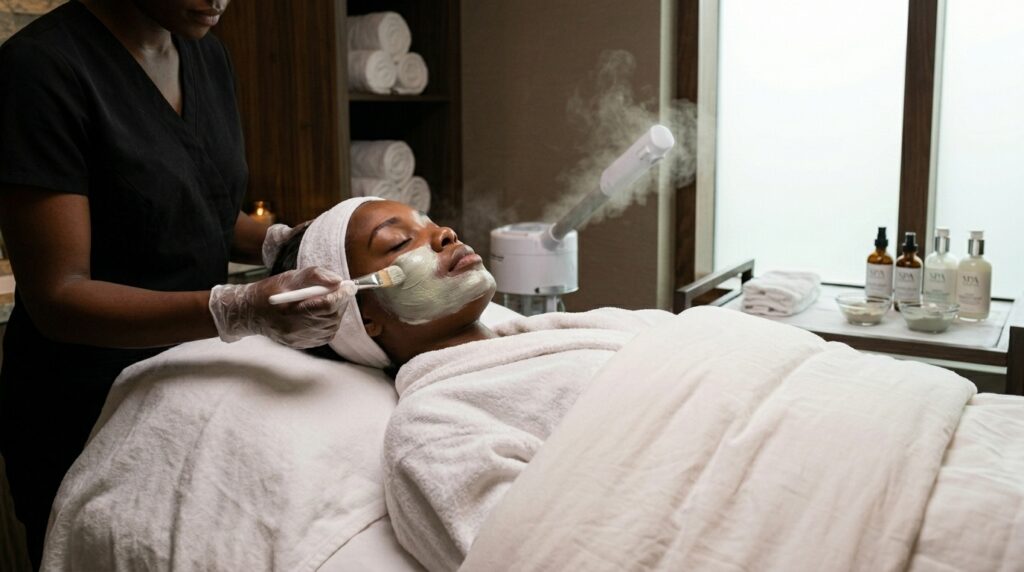
We get this question almost every single week at Beauty By Daz: “Which facial treatment does my skin need?”
“How much is a facial?”
“Can I skip the spa entirely and still get glowy skin at home?”
If any of these questions have crossed your mind, this guide answers all of it.
P.S.: The answer is yes, you can skip the spa.
We (Beauty By Daz) have guided thousands of customers on everything facial treatment in Nigeria, so you’re in safe hands.
P.S.: You can start with our 5 basic skincare routine essentials for beginners if you need to nail the basics first.
Alright, let’s get into the gist.
TL;DR: A 2026 Guide On Facial Treatment in Nigeria
- A facial treatment is a 45 to 90 minute multi-step service that cleanses, exfoliates, extracts, treats, and protects your skin, and you can recreate about 70% of the results at home if you stay consistent with the right products.
- Spa facials in Nigeria run from ₦18,000 to ₦430,000 per session, so building a proper at-home routine is the smarter long-term investment for most people.
- Start with an oil cleanse using the Anua Heartleaf Pore Control Cleansing Oil to dissolve sunscreen and makeup.
- Follow up with a water-based cleanse using the Cosrx Low pH Good Morning Gel Cleanser to wash away sweat and water-soluble dirt without stripping your barrier.
- Exfoliate once or twice a week with the Some By Mi AHA BHA PHA Toner.
- Match your treatment serum to your concern: use the Cosrx Hyaluronic Acid Hydra Power Essence for dehydrated skin, the Cosrx Advanced Snail 96 Mucin Essence for barrier repair, and the Skin1004 Madagascar Centella Ampoule if your skin is reactive.
- For dark spots and uneven tone, layer in the Anua Niacinamide 10% + Tranexamic Acid 4% Serum and stick with it for at least six weeks before judging results.
- Lock everything in at night with the CeraVe Moisturising Cream and protect your skin every morning with the Beauty of Joseon Relief Sun Rice + Probiotics SPF 50.
- Beauty By Daz stocks every authentic product mentioned above and offers in-store consultations at our Ogudu walk-in shop, so you can build the right routine without guessing.
Facial Treatment At a Glance: 2026 Edition
Facial Type |
Best For |
Avg. Price |
How Often Do You Need It? |
|
Deep-Cleansing |
Clogged pores, mild acne |
₦20,000 to ₦45,000 |
Every 4 weeks |
|
Hydrating |
Dryness, dullness |
₦30,000 to ₦60,000 |
Every 4 weeks |
|
HydraFacial |
Pre-event glow, all skin types |
₦70,000 to ₦150,000 |
Every 4 to 6 weeks |
|
Brightening |
Dark spots, uneven tone |
₦40,000 to ₦120,000 |
Every 4 weeks (course of 6) |
|
Chemical Peel |
Pigmentation, acne scars |
₦35,000 to ₦100,000 |
Every 4 to 6 weeks |
|
Microneedling |
Scars, large pores, fine lines |
₦80,000 to ₦200,000 |
Every 6 to 8 weeks |
|
Anti-Ageing |
Sagging, fine lines |
₦60,000 to ₦200,000 |
Every 4 weeks |
|
LED Light Therapy |
Acne, inflammation, ageing |
₦18,000 to ₦50,000 add-on |
Weekly to fortnightly |
What Is a Facial Treatment?
A facial treatment is a multi-step professional skincare service that combines cleansing, exfoliation, extraction, targeted treatment, and hydration to address specific skin concerns in one session.
It is performed by a trained aesthetician using tools, professional-grade actives, and techniques that go far beyond what most at-home skincare products can do on their own.
At home, you cleanse, moisturise, maybe apply a serum, and call it a day.
But a facial uses steam, ultrasonic devices, manual extractions, mask layering, and sometimes light therapy to clean, treat, and revive your skin in one sitting so your daily skincare routine eats.
By the way, if you’re not sure which products belong in that daily routine, our guide on the best face treatment products for glowing skin breaks it down.
The 8 Most Common Types of Facial Treatments in Nigeria
The 8 facial treatments you’ll see most often in Nigerian spas in 2026 are the deep-cleansing facial, hydrating facial, HydraFacial, brightening facial, chemical peel, microneedling, anti-ageing facial, and LED light therapy facial, and each one targets a different concern.
1. Deep-Cleansing (Classic) Facial
A deep-cleansing facial uses steam to soften pores, manual extractions to clear blackheads and congestion, and a clay or charcoal mask to absorb excess oil, making it the perfect facial for anyone with clogged skin, mild acne, or a congested T-zone.
Plus, this facial pairs beautifully with Cosrx Salicylic Acid Cleanser from Beauty By Daz.
2. Hydrating Facial
A hydrating facial floods (literally) dehydrated skin with humectants like hyaluronic acid and glycerin through layered serums, soothing masks, and gentle massage, restoring plumpness and bounce in one session.
If your skin feels tight, flaky, or dull from air conditioning or harmattan, go for this facial.
Beauty By Daz Tip: Once you do this, make sure you add the Anua Heartleaf 77% Soothing Toner to your skincare routine.
3. HydraFacial
A HydraFacial is a patented machine-based treatment that cleanses, exfoliates, extracts, and infuses serums into your skin using vortex suction in 30 to 45 minutes.
It leaves you with visibly brighter, smoother skin and zero downtime, which is why it’s the go-to facial for weddings, photoshoots, and last-minute event prep across Nigeria.
4. Brightening Facial
A brightening facial targets dullness, post-acne marks, and uneven skin tone using vitamin C, niacinamide, mild acids, and gentle peels to fade pigmentation over a series of sessions.
It works best when paired with at-home brightening products like the Beauty of Joseon Glow Deep Serum (Rice + Alpha Arbutin) or the Somebymi Yuja Niacin Anti-Blemish Serum.
P.S.: We have a detailed review of the Somebymi Yuja Niacin Anti-Blemish Serum. You should read it :))
5. Chemical Peel
A chemical peel uses controlled application of acids like glycolic, lactic, salicylic, or TCA to exfoliate the top layer of skin and trigger renewal underneath. It ranges from a mild refresh to deeper resurfacing depending on strength, and it’s the strongest option for stubborn dark spots and acne scars.
Before booking one, read our blog on how to safely introduce lactic acid into your skincare routine so your skin is ready.
P.S.: The blog covers a lot beyond just lactic acid.
6. Microneedling
Microneedling creates thousands of tiny controlled micro-injuries in the skin using a fine needle device, triggering the body’s natural healing response and stimulating collagen production over the next 4 to 8 weeks.
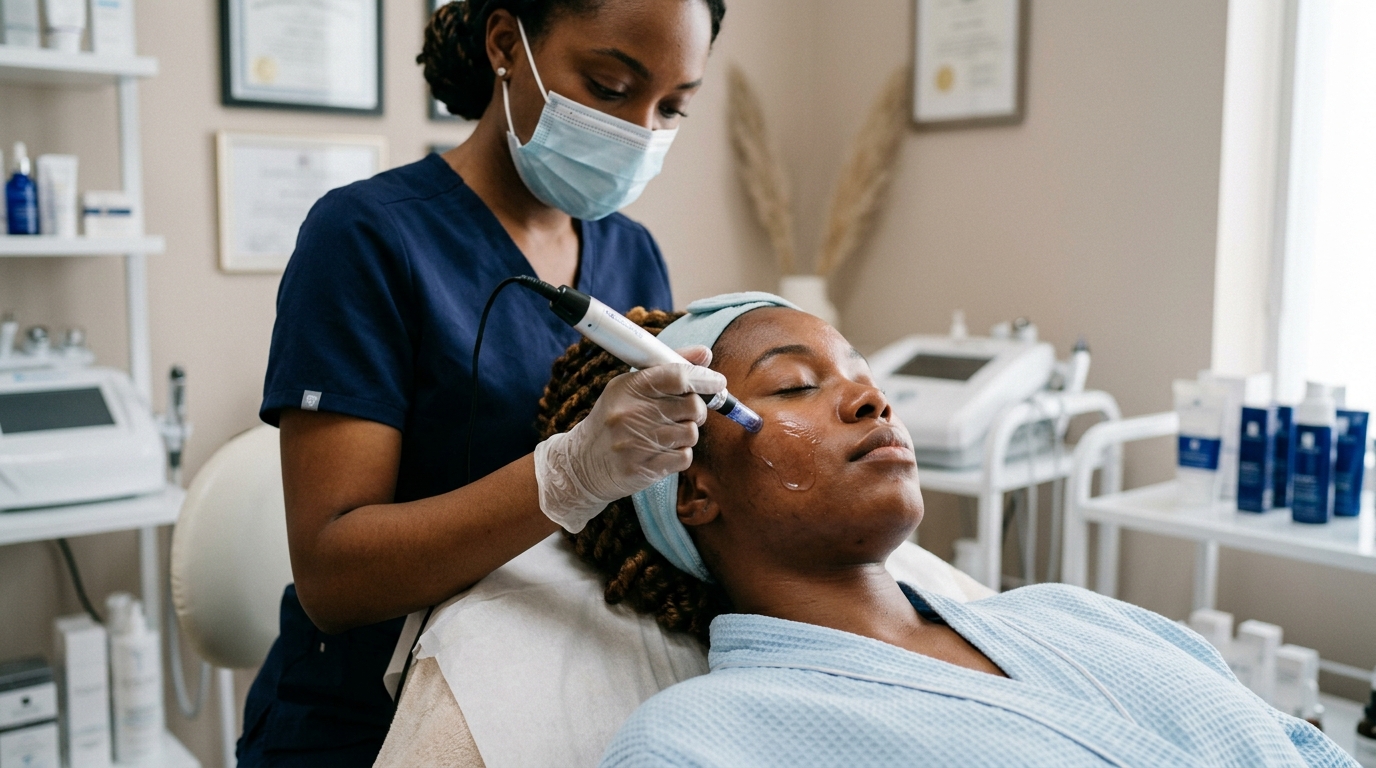
In our opinion, it remains one of the most effective facials for acne scars, fine lines, large pores, and uneven texture.
7. Anti-Ageing (Collagen) Facial
An anti-aging facial combines peptide serums, retinol, growth factors, lifting massage, and sometimes radiofrequency or ultrasound to firm sagging skin and soften fine lines. It works best as a monthly programme paired with at-home peptides like those in the Beauty of Joseon Dynasty Cream or the actives broken down in our blog on anti-aging peptide creams.
8. LED Light Therapy Facial
An LED light therapy facial uses specific wavelengths of light (blue kills acne-causing bacteria, red stimulates collagen, near-infrared deepens healing) to treat skin from the inside out without heat, pain, or downtime. And it’s commonly added as a finishing step to other facials to accelerate results.
How Much Does a Facial Treatment Cost in Nigeria?
A facial treatment in Nigeria costs between ₦18,000 and ₦430,000 per session in 2026, with the average price around ₦65,000 depending on facial type, the spa’s location, and the products used. Know that the high-end medspas in Victoria Island and Ikoyi typically charge two to three times more than spas in Surulere, Ogudu, or Yaba for the same service.
“But why does it cost so much?”
Well, you’re paying for three things: technology (a HydraFacial machine costs millions of Naira to import, which is why those sessions cost more), products (medical-grade serums versus generic ones), and the expertise of the esthetician.
Now, we get it; spending ₦65,000 every month is not realistic for most people. The smarter option is investing in authentic daily products and treating spa facials as occasional maintenance, which is exactly what we help people do at Beauty By Daz.
P.S.: Our guide on beauty tips for busy people covers 11 time-saving routines too :))
Can You Recreate a Facial Treatment at Home in Nigeria?
Yes, you can recreate about 70% of a professional facial at home using a 6-step routine that covers oil cleanse, water-based cleanse, gentle exfoliation, treatment serum, mask, and lock-in moisturiser plus sunscreen.
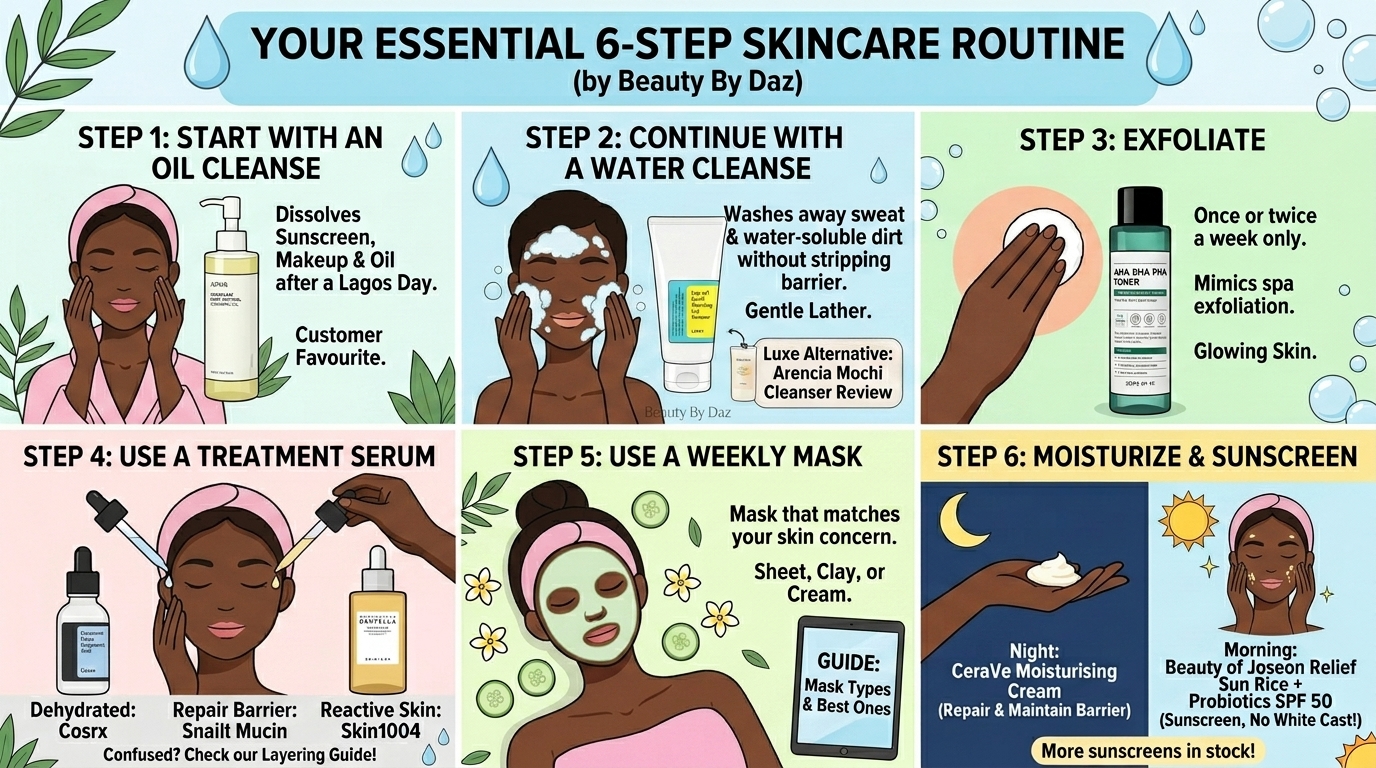 Here’s how to do it:
Step 1: Start With an Oil Cleanse
The oil cleanse is designed to dissolve sunscreen, makeup, and oil-based grime that builds up on your face during a Lagos day; the Anua Heartleaf Pore Control Cleansing Oil is a customer favourite for this step.
…and you can get it at Beauty By Daz.
Step 2: Continue With a Water Cleanse
Next is the water-based cleanse using the Cosrx Low pH Good Morning Gel Cleanser to wash away sweat and water-soluble dirt without stripping your barrier.
If you want something more luxe, our Arencia Mochi Cleanser Review breaks down another alternative.
Step 3: Exfoliate
Exfoliate once or twice a week only, with the Some By Mi AHA BHA PHA Toner from Beauty By Daz.
It mimics what a spa exfoliation does without going overboard.
Step 4: Use a Treatment Serum
You need a treatment serum picked for your concern.
- Use the Cosrx Hyaluronic Acid Hydra Power Essence for dehydrated skin.
- Use the Cosrx Advanced Snail 96 Mucin Essence to repair your barrier repair.
- Use the Skin1004 Madagascar Centella Ampoule from Skin1004 if your skin is reactive.
And if layering the serums feel confusing, our blog on using your face serum correctly, walks you through it.
Step 5: Use a Weekly Mask
Once you’ve identified your skin concern, use a face mask that matches it.
Actually, we have a guide that explains the different types of face masks and best ones to get.
Step 6: Moisturize and Use Sunscreen
For this step, we recommend the CeraVe Moisturising Cream for nights when you want to repair and maintain your skin barrier and the Beauty of Joseon Relief Sun Rice + Probiotics SPF 50 sunscreen every morning. Although, we have more sunscreens in stock (that don’t leave white cast).
Do this consistently for 6 weeks and your skin will rival most single spa sessions.
The Side Effects and Red Flags of a Bad Facial Treatment
Most legitimate facial treatments leave only mild side effects like temporary redness, light flaking, or 24 to 72 hours of sensitivity, but a bad facial can leave your skin barrier broken, permanently darker in patches, or scarred, with warning signs including burning that doesn’t stop, peeling lasting more than a week, and dark patches surfacing days later.
The biggest red flag in unregulated Nigerian spas is the “brightening facial” laced with hydroquinone above 4%, mercury-based agents, or steroid creams used to fake fast results.
These ingredients damage your skin long-term, can trigger ochronosis (a permanent blue-grey discolouration), and thin your skin so badly it never fully recovers. If a spa promises to “make you three shades lighter in one session,” please don’t go.
Other warning signs include dirty extraction tools (a real spa sterilises between clients), chemical peels applied without a patch test, and estheticians who can’t tell you exactly what is touching your face.
If your skin is already reactive, swap your daily wash for the gentle Simple Moisturizing Facial Wash and consider barrier-repair products from CeraVe.
When in doubt, book a skin consultation with Beauty By Daz and we’ll guide you safely through what works.
Who Should and Shouldn’t Get a Facial Treatment?
A facial treatment is a smart investment for adults with congestion, dullness, dehydration, mild acne, post-acne marks, fine lines, or uneven texture, but it’s not safe for everyone, and timing the session correctly matters as much as choosing the right type.
Who Should Consider a Facial Treatment?
Anyone with:
- Consistently clogged pores
- Hyperpigmentation that hasn’t responded to at-home products in 3 months
- Signs of dehydration like tightness or flaking
- Early aging concerns like fine lines or has an important event coming up where you want your skin to peak
- and anyone managing oil and breakouts
Who Should Hold Off on a Facial Treatment?
Anyone:
- With active acne flare with cystic or pustular breakouts
- With broken skin, eczema, or rosacea in an active phase,
- Currently using prescription retinoids like tretinoin without pausing for at least 5 days
- Pregnant (skip chemical peels, retinoids, and brightening treatments entirely)
- And anyone whose skin is already over-exfoliated, red, or stinging.
How Often Should You Get a Facial in Nigeria?
Most people do best with a facial treatment every 4 to 6 weeks in Nigeria, which matches your skin’s natural cell turnover cycle, but the right frequency shifts based on skin type, facial type, and season.
But the humidity and pollution in Nigeria might call for more frequent deep cleansing and harmattan months can call for more hydrating facials and fewer aggressive treatments.
Oily, acne-prone skin benefits from monthly deep-cleansing or LED facials.
Dry or sensitive skin should stick to hydrating facials every 6 to 8 weeks and avoid strong peels.
Pigmentation-prone skin (which is most Nigerian skin) responds best to a series of 6 brightening sessions spaced 4 weeks apart, then maintenance every 8 to 12 weeks.
Between sessions, your daily sunscreen does 90% of the work. The Anua Heartleaf Silky Moisture Sunscreen from Beauty By Daz does the job beautifully.
Our on the best sunscreens in Nigeria explains why sunscreens make or break facial results.
Frequently Asked Questions About Facial Treatments In Nigeria
1. How Long Does a Facial Treatment Take?
A standard facial treatment takes 45 to 90 minutes from start to finish depending on the type, with HydraFacials on the shorter end at 30 to 45 minutes and microneedling or combination facials closer to 90 minutes, plus a short post-care window for moisturiser and sunscreen.
2. Can I Wear Makeup After a Facial?
You should avoid heavy makeup for at least 12 to 24 hours after a facial, especially after extractions, chemical peels, or microneedling, because your pores are open and your barrier is more reactive than usual, which means foundation traps bacteria and undoes the cleansing you just paid for.
3. Do Facials Cause Breakouts?
Facials can trigger temporary breakouts (called purging) within the first 5 to 7 days as deep congestion surfaces, and this is normal for deep-cleansing facials and chemical peels, but new breakouts 2 to 3 weeks later usually mean the products or tools weren’t clean.
4. Is Facial Treatment Safe During Pregnancy?
Most gentle hydrating and deep-cleansing facials are safe during pregnancy, but you should skip chemical peels containing salicylic acid or retinol, brightening facials with hydroquinone, and microneedling entirely, and always tell your esthetician you’re pregnant before booking so they can adjust products.
5. What Is the Best Facial Treatment for Dark Spots in Nigeria?
The most effective approach to fading dark spots in Nigeria is a series of 6 brightening facials paired with consistent at-home use of the Anua Niacinamide 10% + Tranexamic Acid 4% Serum from Beauty By Daz and daily sunscreen.
6. Can Men Get Facial Treatments Too?
Yes, men benefit just as much as women from facial treatments, especially for ingrown hairs in the beard area, congestion from sweat and pollution, and razor-related irritation, and most Lagos spas now offer dedicated gentleman’s facials tailored to thicker skin and beard zones.
Should I Get a Professional Facial Treatment or a DIY At-Home Facial?
Get a professional facial treatment for deep extractions, machine-based services like HydraFacial, and chemical peels that need expert hands, but commit to a DIY at-home facial for weekly maintenance, because the professional session resets your skin and the at-home routine holds the results.
Think of it this way: the spa facial is the deep clean, the at-home routine is the daily upkeep. Without the upkeep, even a ₦200,000 facial fades in 2 weeks. With it, a ₦40,000 facial can carry your skin for months. You’re welcome :))
But before you leave, our Eqqualberry Bakuchiol Plumping Serum Review is worth a read.
See you in the next post :))