

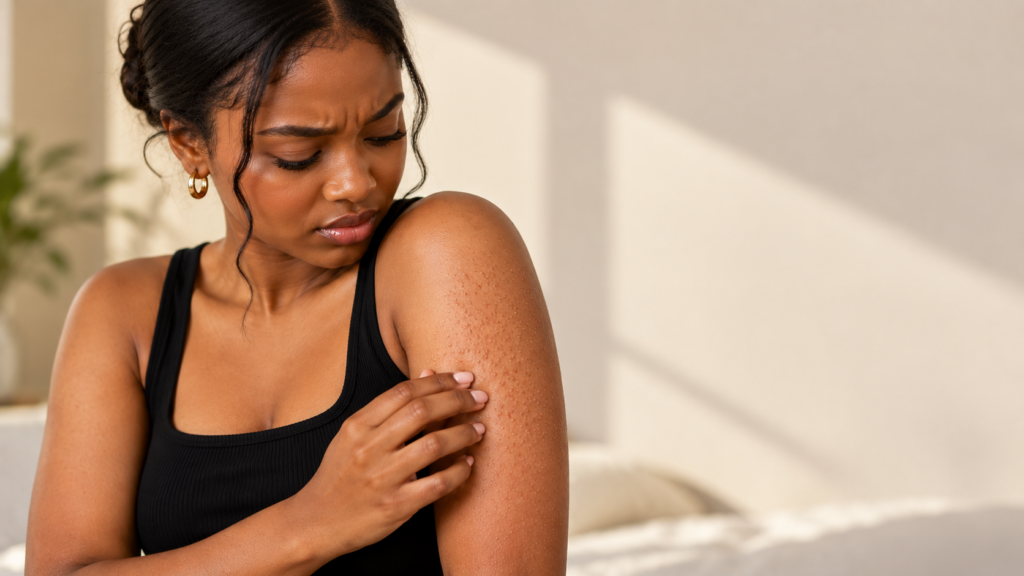
You’re pulling on a sleeveless top when you notice them again: tiny, rough bumps on the backs of your arms that no lotion seems to smooth. Those stubborn little bumps could be keratosis pilaris, commonly known as “chicken skin.”
Relaxxxx… It’s far more common (and more manageable) than it feels right now.
Here at Beauty By Daz, we’ll walk you through what it is, which ingredients can help, and how to treat it without leaving dark marks.
Let’s get into it.
TL;DR: What You Need to Know About Keratosis Pilaris
- Keratosis pilaris is a harmless build-up of keratin in hair follicles that causes rough “chicken skin” bumps, usually on the upper arms, thighs and buttocks.
- It can’t be permanently cured, but urea, salicylic acid, lactic acid and glycolic acid can soften and smooth the bumps.
- Start with ONE product a few times a week and moisturise daily. Expect results to take several weeks.
- On brown and Black skin, irritation can leave dark marks, so skip harsh scrubs and don’t pick.
- Stinging and dryness are the most common side effects. Cut back if they happen.
- Keratosis Pilaris treatments at Beauty By Daz range from ₦16,850 (Alpha Renewal 12% Glycolic) to ₦25,999 (Eucerin UreaRepair Plus 10% Urea).
- Beauty By Daz stocks all the products listed in this guide, sourced directly from manufacturers and delivered nationwide.
What Is Keratosis Pilaris and How Does It Affect Your Skin?
Keratosis pilaris (KP) is a common, harmless skin condition that causes tiny, rough bumps, usually on the upper arms, thighs, buttocks, and sometimes the cheeks.
It happens when keratin builds up around your hair follicles. When lots of these tiny plugs appear together, they create that rough, “chicken skin” texture. Keratosis Pilaris can sometimes itch a little, but it’s more of a texture concern than anything serious.
And if you’ve been moisturising religiously but the bumps are still there, you’re not doing anything wrong. Keratosis Pilaris isn’t simply dry skin, so regular lotion may soften your skin without clearing the plugs causing those bumps.
If your skin is dry and tight without the little bumps, you may just be dealing with dry skin.
In that case, check out our guide to the best body lotions for dry skin in Nigeria.
Is It Keratosis Pilaris or Something Else?

Not every bump on your arms or legs is keratosis pilaris, because eczema, fungal acne, folliculitis, razor bumps and strawberry skin can look similar, but Keratosis Pilaris feels rough rather than painful, rarely itches much, and shows up as lots of tiny, evenly spread bumps on the upper arms, thighs or buttocks.
| Condition | What it looks like | How to Tell the Difference |
| Keratosis pilaris | Tiny rough bumps, upper arms and thighs | Sandpaper feel; rarely painful |
| Eczema | Dry, itchy patches, often in skin creases | Itch is the main complaint |
| Fungal acne | Uniform itchy bumps, chest, back or hairline | Flares with sweat |
| Folliculitis | Inflamed bumps around hair follicles | Can be tender or pus-filled |
| Razor bumps | Bumps and ingrown hairs | Appears after shaving |
| Strawberry skin | Dark dots in the pores, usually on the legs | Often linked to shaving |
Here’s a closer look at the conditions that can be mistaken for Keratosis Pilaris
1. Eczema
Is the itch worse than the roughness?
Eczema itches far more than Keratosis Pilaris and shows up as dry, inflamed patches rather than individual bumps, though the two can appear together.
If you’re dealing with eczema, check out our guide on how to treat eczema.
2. Fungal Acne
Small, uniform, itchy bumps on the chest, back, or hairline that flare after sweating sound more like fungal acne. Read our guide to fungal acne causes, symptoms, and treatment before buying anything for Keratosis Pilaris.
3. Folliculitis, Razor Bumps and Strawberry Skin
All three involve hair follicles, and strawberry skin can come from Keratosis Pilaris, shaving irritation, or visible pores.
P.S.: Bumps that hurt, swell, ooze, or spread quickly aren’t Keratosis Pilaris, so get them checked by a doctor.
What Causes Keratosis Pilaris, and What Makes It Worse?
If you’re wondering why you have Keratosis Pilaris in the first place or why yours seems worse sometimes.
Here are a few causes of Keratosis Pilaris:
1. Your genes
Keratosis Pilaris often runs in families, so you may be more prone to it. If your mum, dad, or siblings have those tiny bumps too, your genetics could be part of the reason.
2. Dry or eczema-prone skin
Keratosis Pilaris is more common in people with naturally dry or eczema-prone skin. When your skin is dry, those little bumps can look and feel more noticeable. Our tips on choosing a body lotion for dry skin can help you keep dry skin under control.
3. Cold, dry weather
You may notice your chicken skin getting worse when the air is dry. In Nigeria, that can mean harmattan or spending lots of time in air conditioning, both of which can leave your skin feeling drier.
4. Long, hot showers
Long, hot showers can dry out your skin and make Keratosis Pilaris more noticeable. Keep your showers warm rather than steaming hot, and moisturise afterwards.
5. Scrubbing or picking at the bumps
Chicken skin can be tempting to scrub, but being aggressive with your skin won’t make it disappear faster. Hard scrubbing, picking, or shaving over irritated bumps can leave your skin more irritated and make the texture look worse.
6. Using too many exfoliants
More exfoliation doesn’t automatically mean smoother skin. Stacking several exfoliating products can leave your skin irritated and dry, which can make those bumps stand out even more.
Some habits can make keratosis pilaris worse. Here are the common ones to avoid:
- Scrubbing hard, including with rough sponges
- Picking or squeezing the bumps
- Shaving or waxing over bumpy areas
- Using two or three exfoliating products at once
The good news is that these are all easy habits to change.
How to Get Rid of Keratosis Pilaris: Which Ingredients Help?
The ingredients that help get rid of keratosis pilaris (KP) are urea, salicylic acid, lactic acid and, for tougher skin, glycolic acid, because each one softens or loosens the keratin plugs while keeping skin moisturised.
The right one for you depends on whether your Keratosis Pilaris is mainly dry, inflamed, thick, or simply stubborn.
1. If Your Skin Is Dry and Rough: Try Urea
Urea pulls water into the skin and loosens the keratin holding the plugs together, making it the gentlest starting point, especially if your skin darkens easily.
We often recommend the Eucerin UreaRepair Plus 10% Urea Intensive Moisturizing Lotion.
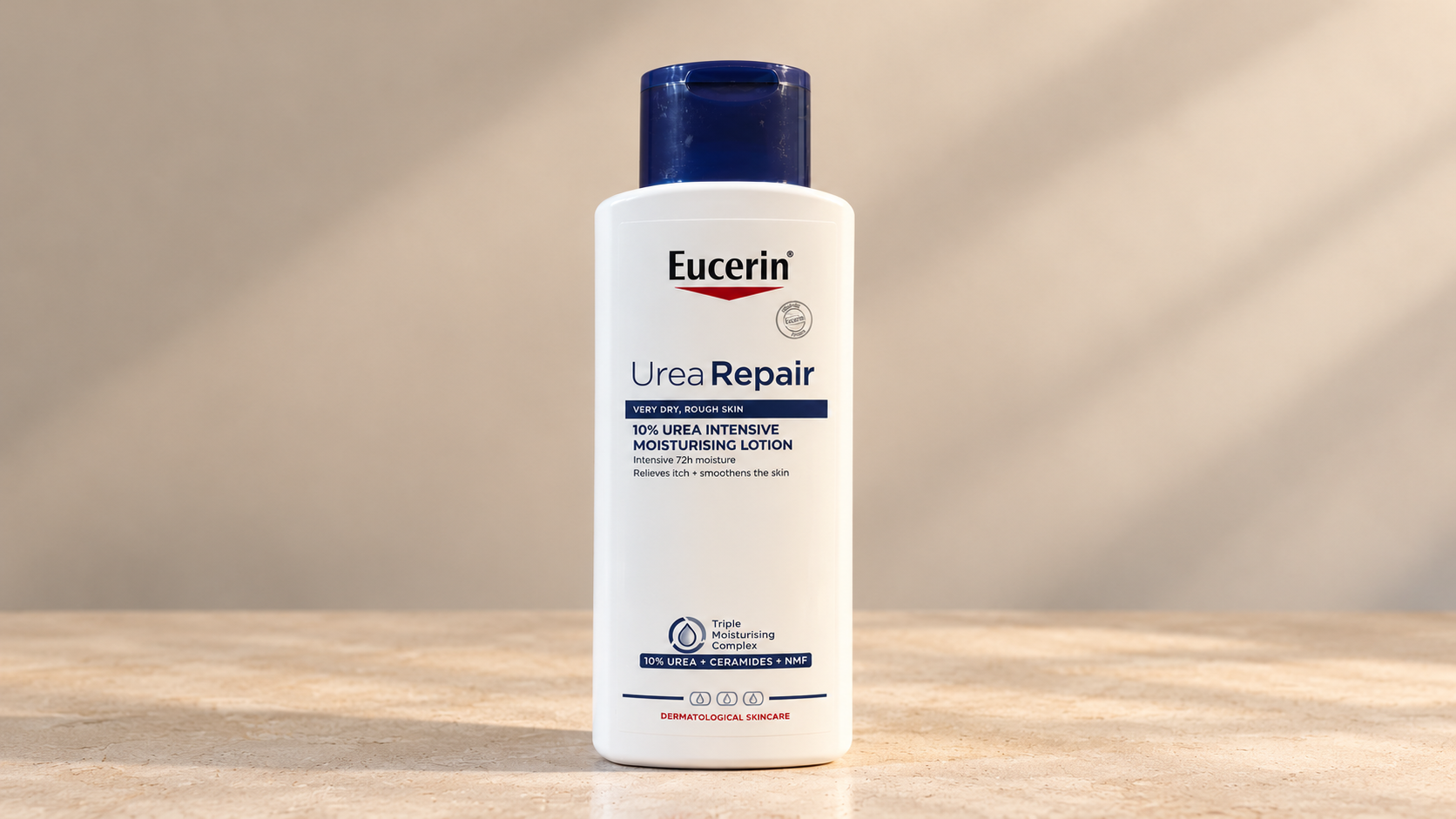
It contains 10% urea, plus ceramides and lactic acid. You can use it once or twice a day, but avoid applying it to cracked skin, where it may sting.
2. If You Have Rough Bumps and Inflammation: Try Salicylic Acid
Salicylic acid is oil-soluble, so it works into the follicle where the plug sits.
Are your bumps red, or do you also get body breakouts? Try the CeraVe SA Lotion for Rough & Bumpy Skin, which pairs salicylic and lactic acid with hyaluronic acid, niacinamide, and three ceramides.
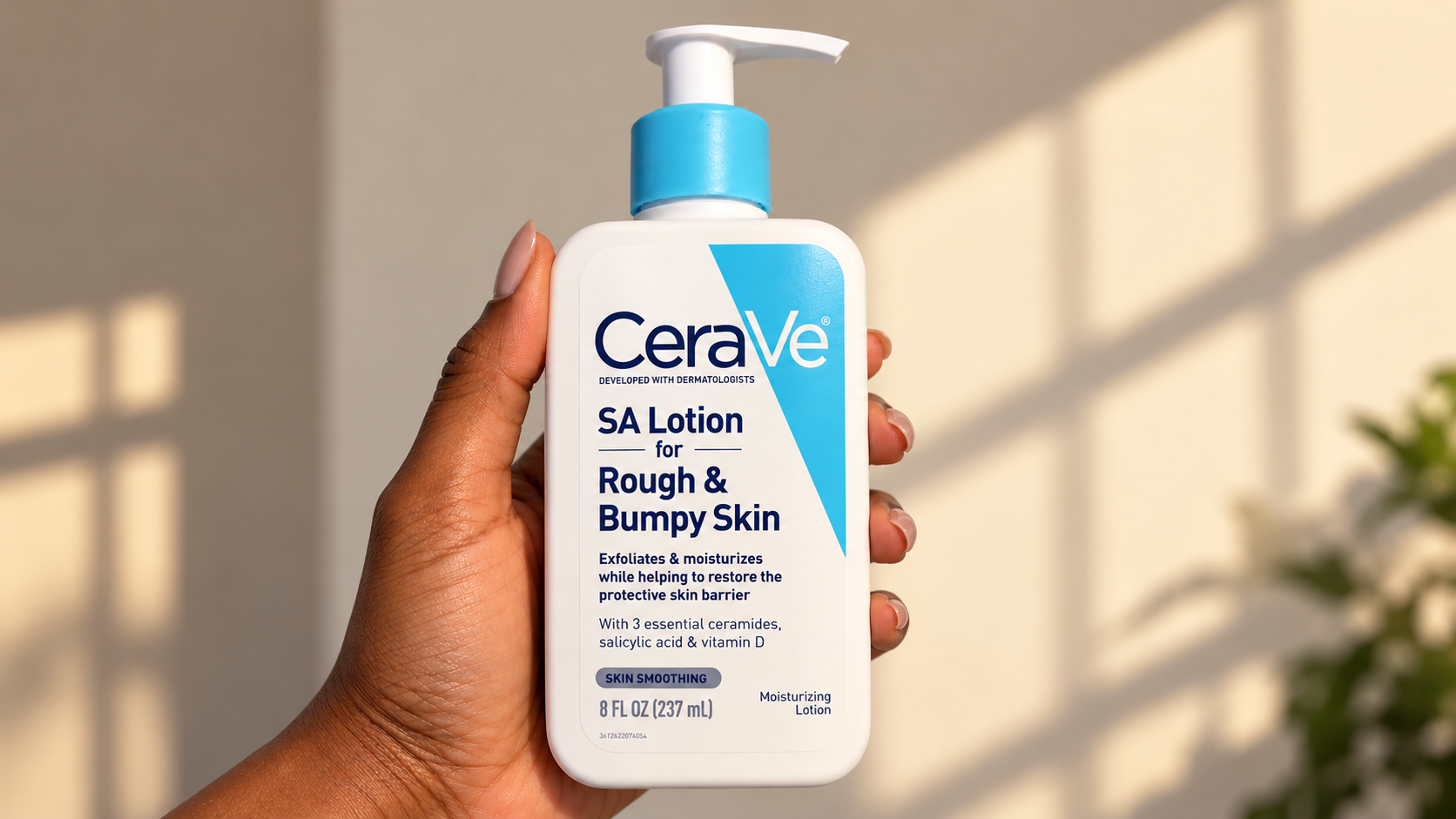
Start by using it every other night, then increase to daily use if your skin is comfortable. Stick to the affected areas instead of applying it all over, and use sun protection during the day because it contains an AHA.
3. If Your Skin Is Thick, Rough Texture: Consider Lactic Acid
Lactic acid is an alpha hydroxy acid (AHA) that exfoliates while holding on to water, which is why it’s a long-standing Keratosis Pilaris treatment. (Here’s how lactic acid works on the skin).
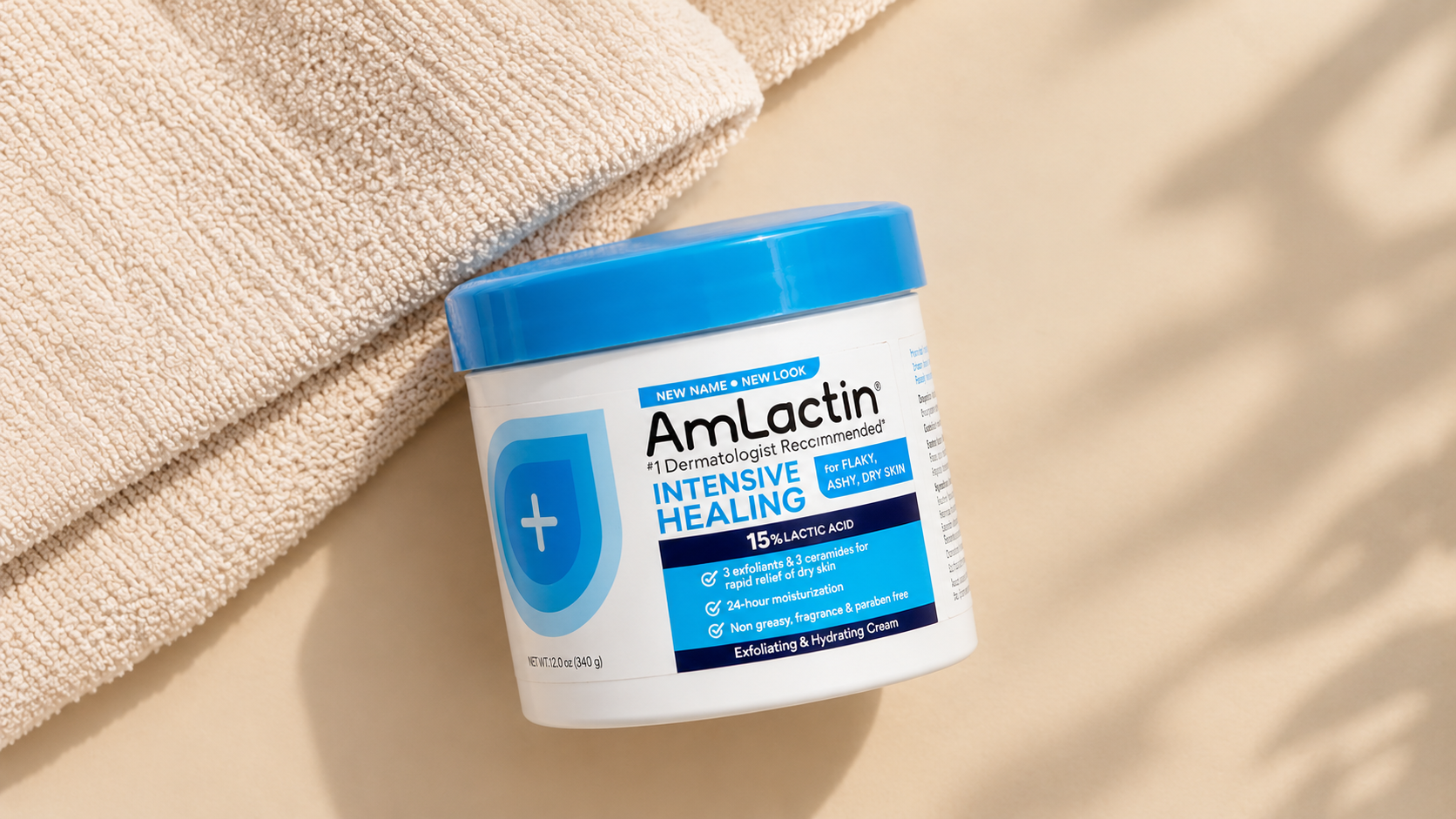
Our go-to product is the AmLactin Intensive Healing Exfoliating & Hydrating Cream, with 15% lactic acid plus ceramides.
Use it if urea hasn’t improved the roughness, but expect some mild stinging if your skin is sensitive or broken.
4. Glycolic Acid for Keratosis Pilaris
Glycolic acid is an AHA that exfoliates the skin and can help smooth rough texture. But stronger isn’t always better: it has less Keratosis Pilaris-specific evidence than the other ingredients we’ve discussed and is also more likely to irritate.
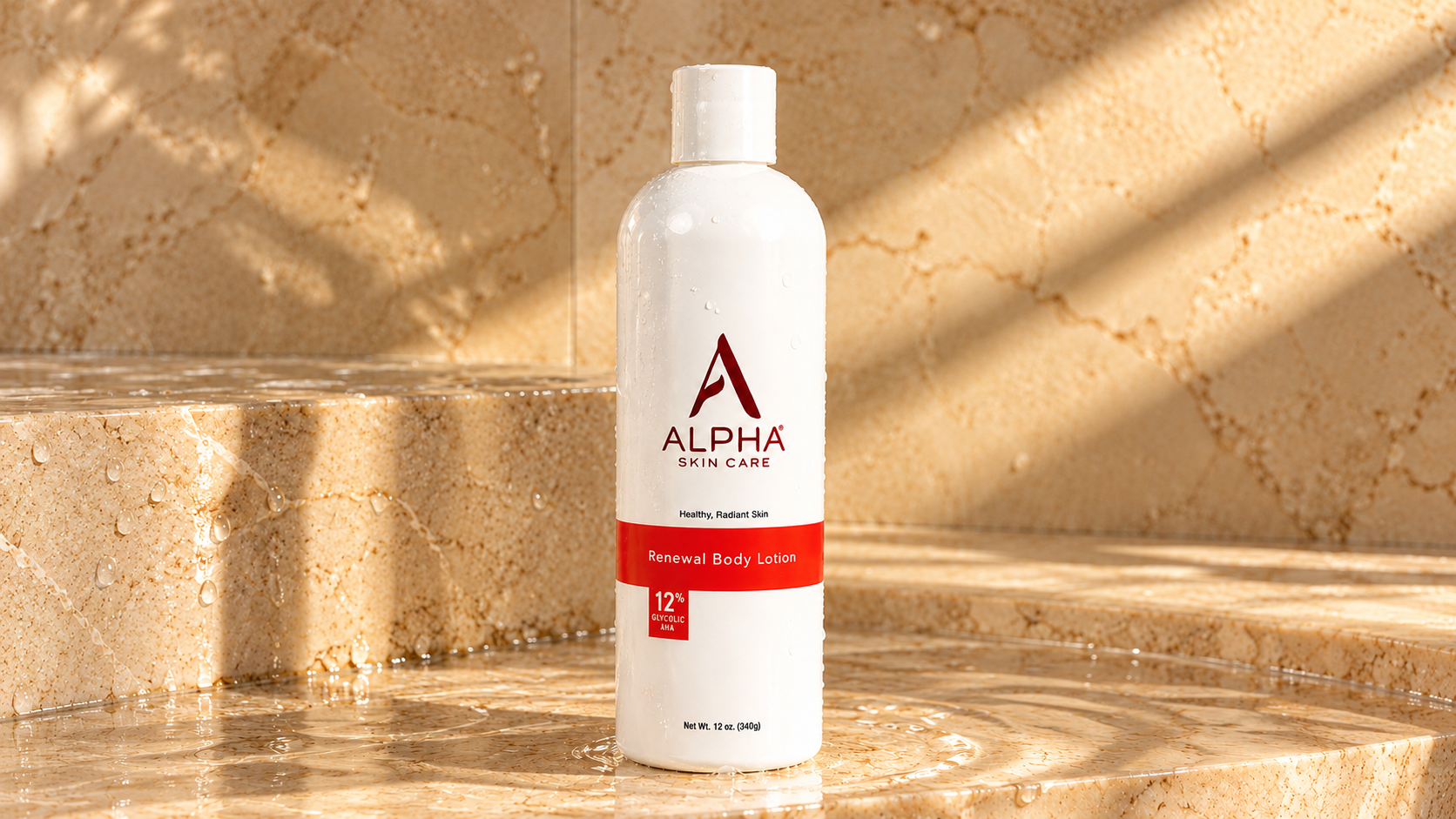
If your skin is resilient and already used to acids, the Alpha Renewal 12% Glycolic Body Lotion is a solid option.
Beauty By Daz Tip: Choose one of these four ingredients. Using several at once won’t clear Keratosis Pilaris faster; it’s more likely to irritate your skin.
How to Use Keratosis Pilaris Treatments Without Causing Irritation or Dark Marks
To treat Keratosis Pilaris without irritating your skin or leaving dark marks behind:
- Start with one active a few times a week.
- Moisturise every day to keep your skin comfortable.
- Build up slowly if your skin is tolerating the treatment well.
- Skip the scrubbing and picking. Irritated bumps can leave dark marks, especially on brown and Black skin.
Why be gentle? When your skin gets irritated or inflamed, it can produce more pigment, which means you could end up with dark spots that take longer to fade than the original bumps.
If products that your skin normally tolerates suddenly start stinging or burning, it may be a sign that your skin barrier needs some TLC. Check out our guide to signs your skin barrier is damaged.
Here’s a simple guide to help you introduce Keratosis Pilaris treatments.
| Stage | Active lotion | What to Do Next |
| Weeks 1 to 2 | Use 2–3 nights a week, e.g., Monday, Wednesday, and Friday. | If there’s no irritation, continue. |
| Weeks 3 to 4 | Use every other night. | If your skin is tolerating it well, continue. |
| After that | Use daily if your skin tolerates it. | If you notice redness, peeling or persistent stinging, use it less often. |
Keratosis Pilaris Treatment: Side Effects and Who Should Be Careful
Keratosis Pilaris treatments can cause some dryness, stinging, peeling, or irritation, especially when you use too much or combine several exfoliating products. The easiest way to avoid this is to start slowly and give your skin time to adjust.
Who Can Use Keratosis Pilaris Treatments?
Keratosis Pilaris treatments can be a good option if you have:
- Rough, bumpy patches on your upper arms, thighs or buttocks
- Skin that feels dry and sandpapery rather than painful
- The patience to use your treatment consistently for several weeks
When Should You Be More Careful With Keratosis Pilaris Treatments?
Some people need to be a little more careful before reaching for an exfoliating treatment:
- Pregnant or breastfeeding: Check with your doctor before using salicylic acid products.
- Young children: Acid-based creams can be too irritating for young skin, so speak with a doctor first.
- Active eczema or broken skin: Wait until your skin has settled before using exfoliating treatments.
- Using prescription treatments: If you’re already using a prescription cream, especially a retinoid, check with your prescriber before adding another active to the same area.
If your skin is particularly sensitive or seems to react to almost everything, our guide to building a skincare routine for sensitive skin can help.
Where to Buy Authentic Keratosis Pilaris Treatments in Nigeria
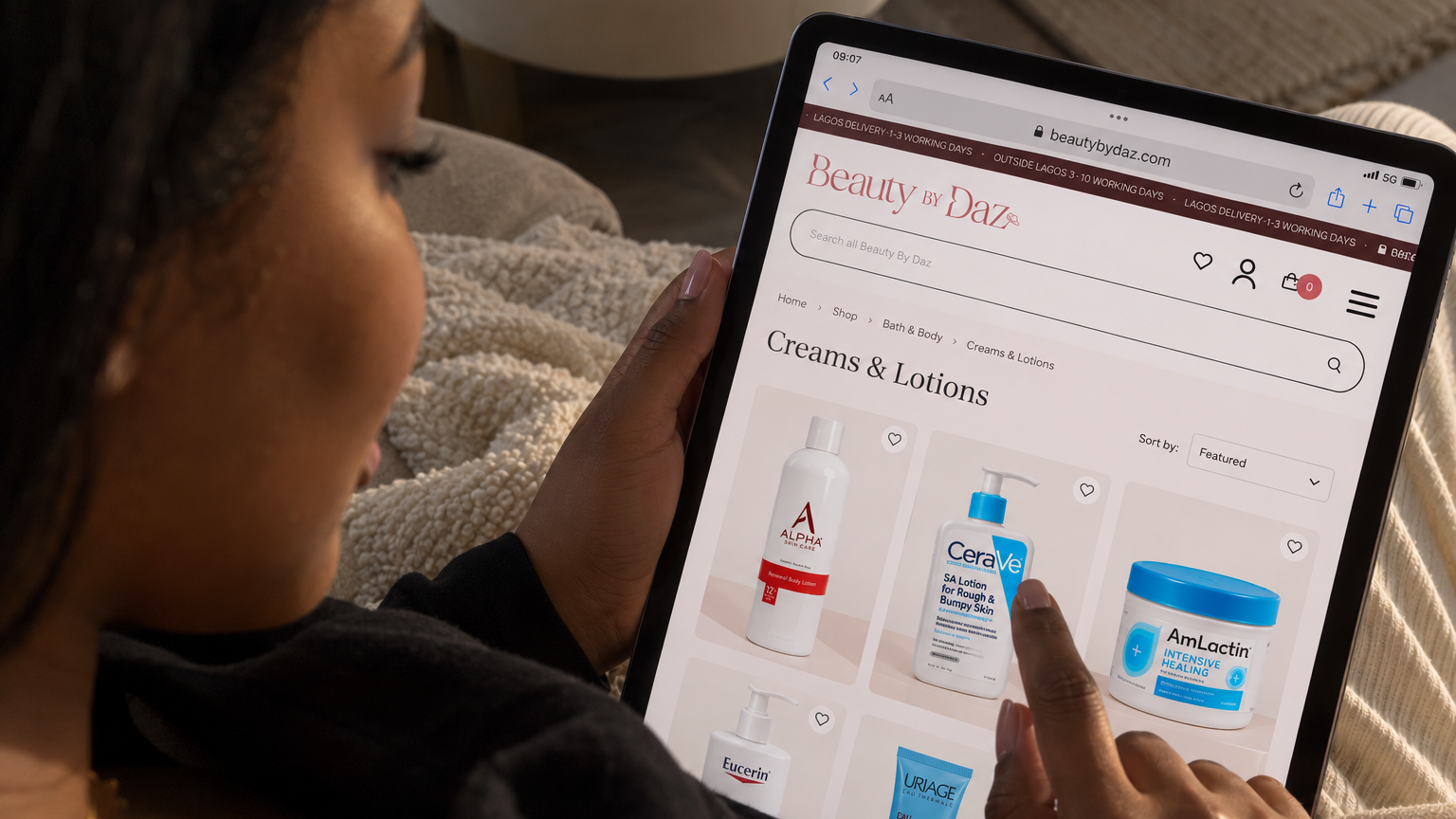
You can shop authentic keratosis pilaris treatment products from Beauty By Daz, with nationwide delivery or in-store shopping at our Lagos store in Ogudu.
Here are some of the Keratosis Pilaris treatments you can shop from Beauty By Daz:
| Product | Key active | Price |
| Alpha Renewal 12% Glycolic Body Lotion, 340g | 12% glycolic acid | ₦16,850 |
| Eucerin UreaRepair Plus 10% Urea Lotion, 250ml | 10% urea | ₦25,999 |
| CeraVe SA Lotion for Rough & Bumpy Skin | Salicylic + lactic acid | #9,950 |
| AmLactin Intensive Healing Cream | 15% lactic acid | ₦27,500.00 |
And sis, be careful where you buy your skincare. Fake skincare products is a real problem in Nigeria, so trust Beauty By Daz for authentic, original skincare you can shop with confidence.
Frequently Asked Questions About Keratosis Pilaris
1. Can You Permanently Get Rid of Keratosis Pilaris, or Does It Go Away by Itself?
No permanent cure exists, but regular treatment smooths keratosis pilaris significantly; it returns if you stop, though it often eases with age.
2. How Can I Get Rid of Keratosis Pilaris on My Arms Quickly?
There’s no overnight fix: one suitable lotion used consistently, daily moisturiser and no scrubbing gets results over several weeks, and Beauty By Daz can help you choose.
3. What Gets Mistaken for Keratosis Pilaris?
Eczema, fungal acne, folliculitis, razor bumps, body acne and strawberry skin are the usual lookalikes.
4. Is Keratosis Pilaris Harmful?
No. It’s harmless and not contagious, though picking or over-treating it can cause irritation and dark marks.
5. What Vitamins Help with Chicken Skin?
There’s no evidence that supplements can treat ordinary keratosis pilaris. So you don’t need to start taking random vitamins just because you have Keratosis Pilaris.
6. What Makes Keratosis Pilaris Worse?
Dry skin, long hot showers, scrubbing, picking, shaving over bumps and stacking exfoliants.
7. Can Keratosis Pilaris Cause Dark Spots?
Yes. On brown and Black skin, irritated or scratched bumps can leave dark marks, so gentle treatment and sun protection matter.
8. Where Can I Buy Original Products for Keratosis Pilaris?
You can get original skincare products from Beauty By Daz, online with nationwide delivery or in-store at 175 Ogudu Road, Ogudu City Mall, Lagos.
9. What Keratosis Pilaris Looks Like on Brown and Black Skin
On deeper skin tones, the bumps often look brown or darker rather than red, so many people don’t recognise them as Keratosis Pilaris. Irritated or picked bumps can also leave dark marks (post-inflammatory hyperpigmentation).
So… Can You Really Get Rid of Keratosis Pilaris?
Keratosis pilaris doesn’t have a permanent cure, but it can be managed. Choose one ingredient that suits your skin, moisturise daily, skip the harsh scrubbing, and give your routine a few weeks before deciding whether it’s working.
If you’re still not sure it’s Keratosis Pilaris, or which product fits? Book a skin consultation with Beauty By Daz or WhatsApp us on +234 703 975 6477.
See you in the next post ^_^