
Whenever a customer walks into Beauty By Daz, one of the first questions we hear is, “Retinol vs tretinoin: which is better?”
We understand that you want to choose the right retinoid for your skin concerns, but knowing the difference between retinol, retinal, and tretinoin can make that decision easier.
So, let’s break down how they compare, what each one does, and which might be the better fit for your skin.
TL;DR: Retinol vs Tretinoin vs Retinal
- Retinol is a gentler starting point for beginners looking to improve fine lines, dullness, and uneven skin texture.
- Retinal is one step closer to the active form of vitamin A than retinol, making it a stronger over-the-counter option.
- Tretinoin is a more potent retinoid commonly used to treat acne and other skin concerns under professional guidance.
- Retinol, retinal and tretinoin can take several weeks to months to improve acne, dark marks, fine lines and uneven texture.
- Irritation is possible: All three can cause dryness, redness, and peeling. Start slowly, moisturise, and wear sunscreen daily.
- Consider your skin concerns, experience with retinoids, and tolerance for irritation rather than choosing the strongest option first.
- Avoid topical retinoids during pregnancy and when trying to conceive. Seek medical advice before use while breastfeeding.
- At Beauty By Daz, prices range from ₦3,950 for Aret Tretinoin 0.025% Gel to ₦26,999 for CeraVe Resurfacing Retinol Serum.
Retinol vs Tretinoin vs Retinal: Quick Comparison
In case you’re in a hurry here for the full picture: here’s how retinol, retinal, and tretinoin compare:
| Feature | Retinol | Retinal | Tretinoin |
| What it is | Cosmetic form of vitamin A | Cosmetic form of vitamin A, one step up | Retinoic acid, a medicine |
| Conversion needed | Two steps before becoming retinoic acid | One step before becoming retinoic acid | None; it’s already in its active form |
| Relative strength | Usually gentler than retinal and tretinoin. | Stronger than retinol. | Stronger than retinol and retinal. |
| Speed of results | Slowest | Faster than retinol | Fastest |
| Common uses | Fine lines, uneven texture, dullness, and mild acne concerns | Fine lines, dark marks, texture | Acne, sun damage, stubborn dark marks, wrinkles |
| Typical irritation | Low to moderate | Moderate | Higher, especially in the first weeks |
| Who may prefer it | Beginners and sensitive skin | People who want to try something stronger than retinol. | Anyone dealing with persistent skin concerns who may need stronger treatment. |
From the table, we can see that retinol is generally the gentler option, retinal offers a step up in potency, and tretinoin is the strongest of the three.
P.S.: These are general comparisons, not guarantees. Concentration, formulation, frequency of use, and individual skin tolerance all affect how each ingredient performs.
What Is Retinol?
Retinol is the gentle form of vitamin A that your skin has to convert twice, first into retinal and then into retinoic acid, before it can work.
This is exactly why it’s milder, slower, and the easiest retinoid to start with for fine lines, texture and uneven tone.
Once it gets to work, retinol speeds up how quickly your skin renews itself. Most people notice smoother texture in about 4 to 6 weeks, with tone and fine lines improving closer to 12 weeks.
You might get some dryness, tingling or a short purge at the start, but it’s mild.
This is why we tell most first-timers to start with retinol. Our 10 Best Retinol Serums guide breaks down which ones suit which concerns, from total beginners to sensitive skin.
What Is Retinal?
Retinal, short for retinaldehyde, is the vitamin A form that sits one step from retinoic acid, so your skin only has to convert it once, which makes it stronger and faster than retinol while staying gentler than tretinoin.
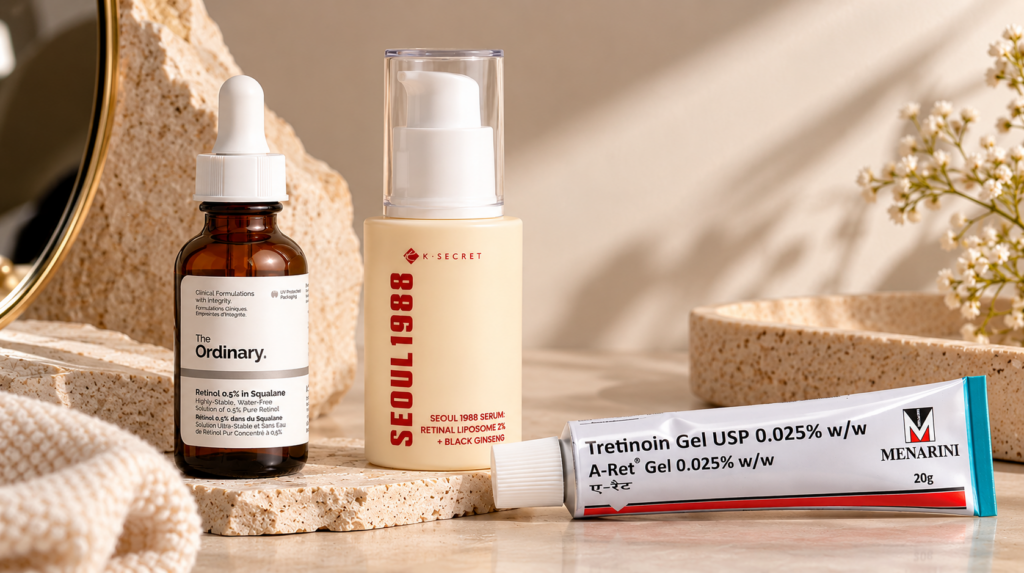
It is usually the next step for people whose retinol has started to feel like it isn’t doing much anymore. With a gentle retinal serum like the Seoul 1988 Retinal Serum, most consistent users notice smoother skin and a brighter tone in about 4 to 8 weeks.
Retinal targets the same things retinol does (fine lines, dark marks, rough texture, and dullness) but tends to get there quicker
What Is Tretinoin?
Tretinoin is retinoic acid itself, the active form of vitamin A your skin uses, so it skips the conversion steps entirely and gets straight to work, which makes it stronger and faster than retinol and retinal for treating acne and sun damage, but also more likely to cause irritation.
You might know it by brand names like Retin-A. At Beauty By Daz, the one most people ask for is the Aret Tretinoin 0.025% Gel by Menarini, which comes in 0.05% and 0.1% strengths.
One more thing you should know. Tretinoin isn’t necessarily the right first step for everyone, and that’s okay! You’ll get the full gist in this article: Aret Tretinoin Gel Review.
Retinol vs Tretinoin: What’s the Difference?
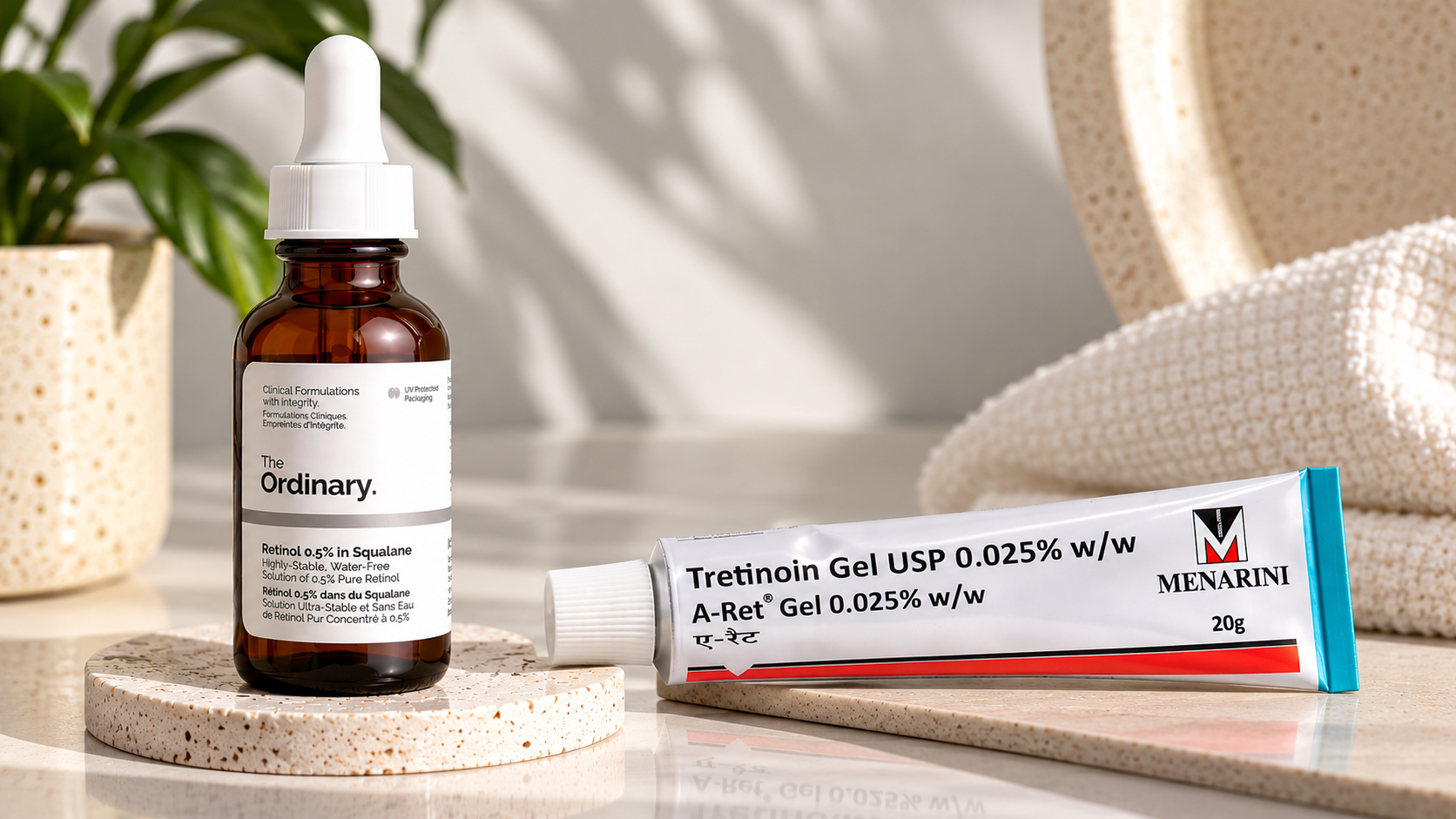
Retinol needs two steps to become active in your skin, while tretinoin is already active. This makes tretinoin generally stronger and more irritating, while retinol is a gentler option for beginners.
So what does this mean for your skin? Let’s see…
1. Retinol vs Tretinoin Strength
Tretinoin is clearly the stronger of the two. What nobody can honestly give you is an exact “tretinoin is X times stronger” number, because it depends on how much retinol your skin converts, the formula, and the strength you’re using.
2. Which Works Faster: Retinol vs Tretinoin?
Tretinoin gets you there sooner, but it isn’t instant, and the first few weeks can actually look worse before they look better.
Here’s how retinol and tretinoin compare:
| Timeline | Retinol | Tretinoin |
| Weeks 1 to 2 | Mild tingling or dryness, if anything | Dryness, light peeling, tightness |
| Weeks 3 to 6 | First signs of smoother texture | Possible purge; texture starting to change |
| Weeks 6 to 8 | Smoother texture | Skin calming; texture visibly smoother |
| Weeks 8 to 12 | More even tone, fine lines starting to soften | Clearer skin, dark marks fading |
| 3 to 6 months | Steady, gradual improvement | Fuller payoff on texture, tone and fine lines |
See it as tretinoin being the faster road with more bumps; while retinol is the slower road that’s smoother to drive.
3. Retinol vs Tretinoin for Acne
For active acne, tretinoin is the stronger option. It keeps dead skin from clogging your pores, which stops new blackheads, whiteheads, and pimples from forming in the first place.
Retinol can help with mild congestion and the odd breakout, but if you’re dealing with regular, stubborn acne, it’s usually not strong enough to be your main treatment.
4. Retinol vs Tretinoin for Acne Scars and Dark Marks
Both help fade the dark marks pimples leave behind (post-inflammatory hyperpigmentation), and both can smooth mild, uneven texture, with tretinoin usually working faster.
What neither will do is fill in deep, pitted scars like ice-pick or boxcar scars. Retinoids can soften how they look, but those scars need in-clinic treatments.
If dark marks are your main worry, our guide to face serums for dark spots is worth a read, and the CeraVe Resurfacing Retinol Serum is a gentle retinol made specifically for post-acne marks.
5. Tretinoin vs Retinol for Wrinkles and Anti-Ageing
Tretinoin is generally stronger for visible signs of sun damage, like fine lines, rough texture, and sun spots. Retinol is gentler and can help with early fine lines and keeping your skin smooth, making it a good option for many people in their late 20s and 30s.
And whichever one you pick, sunscreen is its non-negotiable partner. A retinoid without daily SPF is like mopping the floor with the tap still running. You gerrit?
Retinol vs Tretinoin vs Retinal: Which Is More Effective?
Tretinoin is the most potent of the three, but the most effective retinoid for you is the one your skin can tolerate and you can use consistently, so a gentle retinol used three nights a week for months can beat a tretinoin you keep stopping because it burns.
We know that’s not the dramatic “tretinoin wins” answer you were expecting, right? But stronger only means better if your skin can handle it.
Before you pick, ask yourself:
- What’s my main goal? Stubborn acne justifies tretinoin. Early fine lines, dullness or rough texture can be handled well by retinol or retinal.
- How does my skin react to actives? If your skin gets red and angry easily, or your skin barrier is already struggling, start lower.
- Have I used a retinoid before? Going from nothing straight to tretinoin is the most common way people end up peeling, frustrated, and quitting.
- Will I actually be consistent? Results come from months of regular use, not from one strong tube used now and then.
- Will I wear sunscreen every single morning? If the honest answer is no, no retinoid is a good idea yet.
There’s no need to jump straight into the strongest option. Book a consultation with Beauty By Daz to discuss your skin concerns and possible next steps.
What Are the Side Effects of Retinol, Retinal, and Tretinoin?
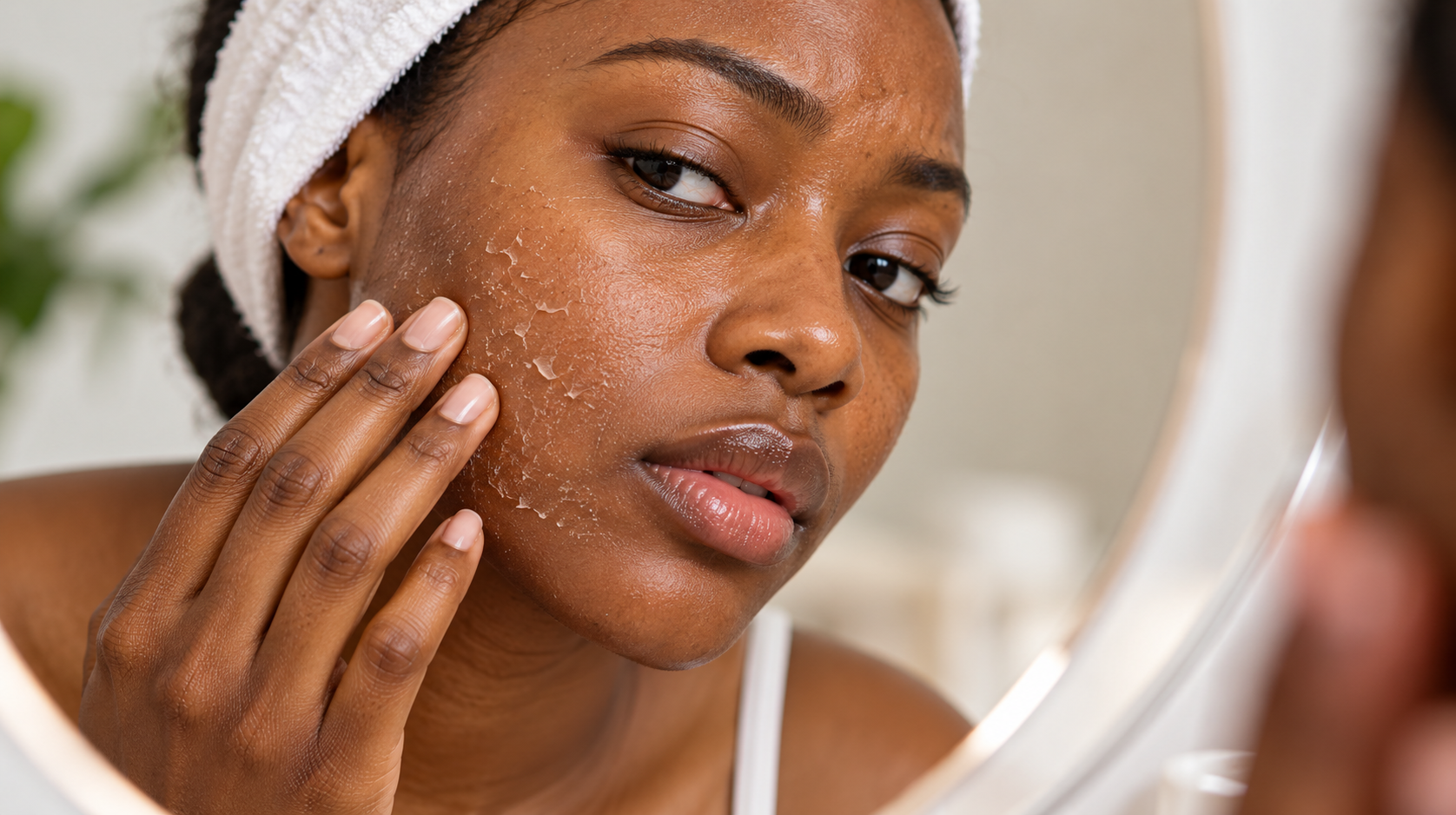
All three retinoids can cause dryness, peeling, redness and sensitivity while your skin adjusts, with tretinoin usually the most intense, retinal in the middle and retinol the mildest, and most of it settles within a few weeks if you start slowly, moisturise well and wear sunscreen daily.
Whichever retinoid you choose, these tips can help you get started:
- Start slowly: two or three nights a week, then build up as your skin settles.
- Use a pea-sized amount for your whole face: More product means more irritation, not faster results.
- Apply to completely dry skin: Damp skin can make retinoids sting more.
- Buffer with moisturiser: A layer before and after (the “sandwich”) softens the impact. Our list of the best moisturisers for acne-prone skin has options that won’t clog pores.
- Keep strong acids and scrubs off the same night.
P.S. If you notice breakouts, don’t automatically assume it’s purging. Persistent burning, redness, swelling, or painful peeling may be signs of irritation, so stop using the product and get your skin checked.
Can Retinoid Irritation Cause Dark Marks on Darker Skin?
Yes, retinoid irritation can cause marks on darker skin because:
- Inflammation triggers excess melanin, which can lead to dark patches known as post-inflammatory hyperpigmentation (PIH).
- Persistent irritation like burning, redness, and peeling can signal irritation
- Frequent application or a strength your skin cannot tolerate can increase irritation.
- Sun exposure can worsen existing dark marks, which is why daily sunscreen is so important.
“If it’s burning, that means it’s working” is a myth you should drop right now. Going slow and wearing sunscreen isn’t OPTIONAL.
If you need a sunscreen that works in Nigeria’s weather, start with our guide to the best sunscreens in Nigeria.
How Much Do Retinol, Retinal and Tretinoin Cost in Nigeria?
At Beauty By Daz, tretinoin is surprisingly the most affordable of the three, starting at ₦3,950 for Aret Tretinoin 0.025% Gel, while retinal serums like Seoul 1988 cost ₦12,950 and retinol serums vary by brand, with the CeraVe Resurfacing Retinol Serum at ₦26,999.
Here’s how the options we’ve mentioned compare:
| Product | Type | Size | Price |
| Aret Tretinoin 0.025% Gel | Tretinoin | 20g | ₦3,950 |
| Menarini A-Ret Tretinoin 0.05% Gel | Tretinoin | 20g | ₦4,950 |
| Tretin 0.05% Cream | Tretinoin | 30g | ₦6,850 |
| Seoul 1988 Retinal Liposome 2% Serum | Retinal | 30ml | ₦12,950 |
| CeraVe Resurfacing Retinol Serum | Retinol | 30ml | ₦26,999 |
If you’re considering tretinoin, take a look at Aret Tretinoin 0.025% Gel. For retinal, the Seoul 1988 Retinal Serum is another option. If you’d prefer to explore retinol first, our guide to the best retinol serums can help you compare your options.
Retinol vs Tretinoin vs Retinal: Who Should Consider Them and Who Should Avoid Them?
- Choose retinol if you’re new to retinoids or want to address early fine lines, dullness, and uneven texture.
- Consider retinal if you’re comfortable using retinol and want to try a stronger over-the-counter option.
- Consider tretinoin if you have persistent acne or other concerns that may benefit from prescription treatment. Speak with a qualified healthcare professional first.
Avoid Retinol, Retinal and Tretinoin If You Are:
- Pregnant or trying to conceive: Avoid topical retinoids and ask your healthcare professional about suitable alternatives, such as azelaic acid.
- Breastfeeding: Seek medical advice before using retinoids.
- If your skin barrier is damaged or you have active eczema, first check out this guide on how to manage it.
- Not using sunscreen consistently: Build a daily sunscreen habit before starting retinoids, as sun exposure can worsen dark marks.
Frequently Asked Questions About Retinol vs Tretinoin
1. Which Should I Use: Retinol or Tretinoin?
Use retinol if you’re new to retinoids, have sensitive skin or mainly want to prevent early ageing, and consider tretinoin if you have stubborn acne or sun damage and your skin already tolerates a retinoid.
2. Which Is More Effective, Tretinoin or Retinol?
Tretinoin is more potent and works faster, especially for acne and sun damage. But more potent only means more effective if your skin tolerates it and you use it consistently, which is why many people get better long-term results from a retinol they actually stick with.
3. How Do I Move from Retinol to Tretinoin?
Build tolerance gradually: use your retinol consistently until your skin is comfortable with it, and consider a retinal serum as a gentler bridge if you want one. When you switch, replace your retinol rather than layering the two; start with a lower-strength tretinoin and ease it in slowly.
4. Is Retinal Stronger than Retinol?
Yes. Retinal is one conversion step away from retinoic acid while retinol is two, so retinal generally works faster and feels stronger.
5. Does Tretinoin Give Glowing Skin?
Tretinoin can give you that glow over time, because faster cell turnover leaves skin smoother, more even and better at reflecting light. Expect it after the adjustment period,
6. Can You Use Retinol and Tretinoin Together?
It’s best not to. Using two retinoids at once mostly doubles the irritation without doubling the results, so pick one and use it consistently. If you want to know where everything else in your routine should go, our guide on how to layer skincare products explains it
7. Where to Buy Retinol, Retinal and Tretinoin in Nigeria
You can buy retinol, retinal and tretinoin from Beauty By Daz online, with delivery across Nigeria, or visit our store at 175 Ogudu Road, Ogudu City Mall, Lagos. We source our skincare products from manufacturers to help you shop with confidence.
8. How Can You Tell If Tretinoin Is Fake?
To spot a fake Aret Tretinoin, check that the packaging has clear branding, a readable batch number and expiry date, and an intact seal. The gel should not look cloudy or discoloured. Be cautious of unusually low prices, and buy from reputable sellers like Beauty by Daz
Final Thoughts: Retinol vs Tretinoin vs Retinal
Retinol, retinal and tretinoin can all help address concerns like acne, uneven skin tone and fine lines, but they differ in strength, formulation and how they should be used. The right choice depends on your skin concerns, experience with retinoids and tolerance for irritation.
If you’re new to retinoids, start slowly, moisturise consistently and wear sunscreen daily.
Still not sure which one is right for your skin? Send us a message on WhatsApp at +234 703 975 6477 or visit us at 175 Ogudu Road, Ogudu City Mall, Ogudu, Lagos, and we’ll figure it out together.
We promise :))