

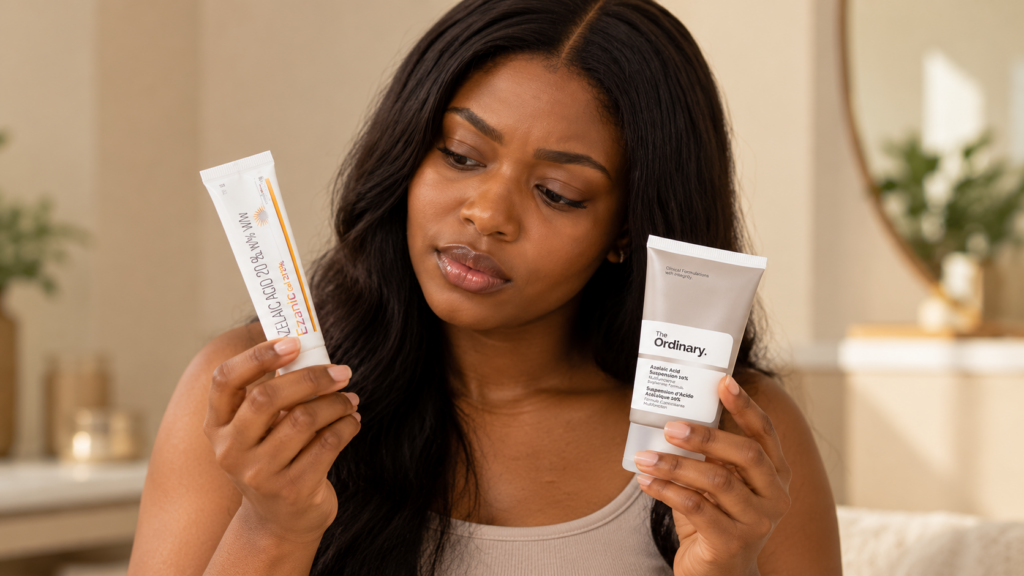
Choosing between The Ordinary Azelaic Acid Suspension 10% and Ezanic Azelaic Acid Gel 20% can be confusing, especially when both contain the same active ingredient.
At Beauty By Daz, we help customers explore skincare products based on their skin concerns and routines. In this guide, we compare both azelaic acid products, looking at their texture, formulation, intended uses, and price to help you make a more informed choice.
So, which one is better for acne, dark spots, and uneven skin tone? Let’s break down the differences.
TL;DR: Ezanic Is the Higher-Strength Acne Gel, The Ordinary Is the Lower-Strength Daily Formula
- Ezanic contains 20% azelaic acid, while The Ordinary contains 10% azelaic acid.
- Ezanic comes in a lightweight gel, while The Ordinary has a smooth, silicone-based, cream-like formula.
- For active acne and post-acne marks, Ezanic is positioned as a targeted acne treatment.
- For uneven skin tone and rough texture, The Ordinary is designed for daily use across the face.
- Both may help improve the appearance of blemishes, redness and dark marks, but results take consistent use.
- Both can cause irritation, so patch test and introduce your chosen product gradually.
- Ezanic costs ₦7,950 (15g) and The Ordinary ₦10,500 (30ml) at Beauty By Daz, with nationwide delivery and our Ogudu City Mall store in Lagos.
- The best choice depends on your skin concerns, tolerance and preferred formula, not simply which product has the higher concentration.
- If you’re unsure which to go for, book a Beauty By Daz skin consultation for personalized guidance.
Ezanic vs The Ordinary Azelaic Acid at a Glance
Here is a quick look at the difference between Ezanic azelaic acid vs The Ordinary azelaic acid:
| Ezanic Azelaic Acid Gel | The Ordinary Azelaic Acid Suspension 10% | |
| Azelaic acid strength | 20% | 10% |
| Format | Lightweight gel | Cream-like suspension (silicone-based) |
| Main focus | Active acne, post-acne dark marks, redness | Uneven tone, dullness, rough texture, look of redness |
| How it’s usually applied | Thin layer on affected areas | Small amount across the whole face |
| How to start | Pea-sized amount, 2 nights a week, build up slowly | Morning and evening per brand directions; patch test first |
| May suit you if… | Breakouts are your main concern and your skin tolerates actives | You’re new to azelaic acid or mainly want even tone and smoother texture |
What Do Ezanic and The Ordinary Azelaic Acid Have in Common?
Although Ezanic Azelaic Acid Gel and The Ordinary Azelaic Acid Suspension 10% differ in concentration and texture.
Here are other things they have in common:
- Both contain azelaic acid: The Ordinary contains 10%, while Ezanic contains 20%.
- Both target skin concerns: They may help improve the appearance of blemishes, redness and uneven skin tone.
- Both require consistent use: Results develop gradually, so neither should be judged after just a few applications,
- Both can irritate: Tingling, dryness or stinging may occur, particularly when introducing azelaic acid into your routine.
- Both require a sensible skincare routine: Patch testing, moisturising and daily sunscreen use can help support your skin while using either product.
Want to learn more about Ezanic Adela’s acid, possible side effects and what our aestheticians recommend? Read our full Ezanic Azelaic Acid Gel review.
Ezanic vs The Ordinary: What’s the Difference?
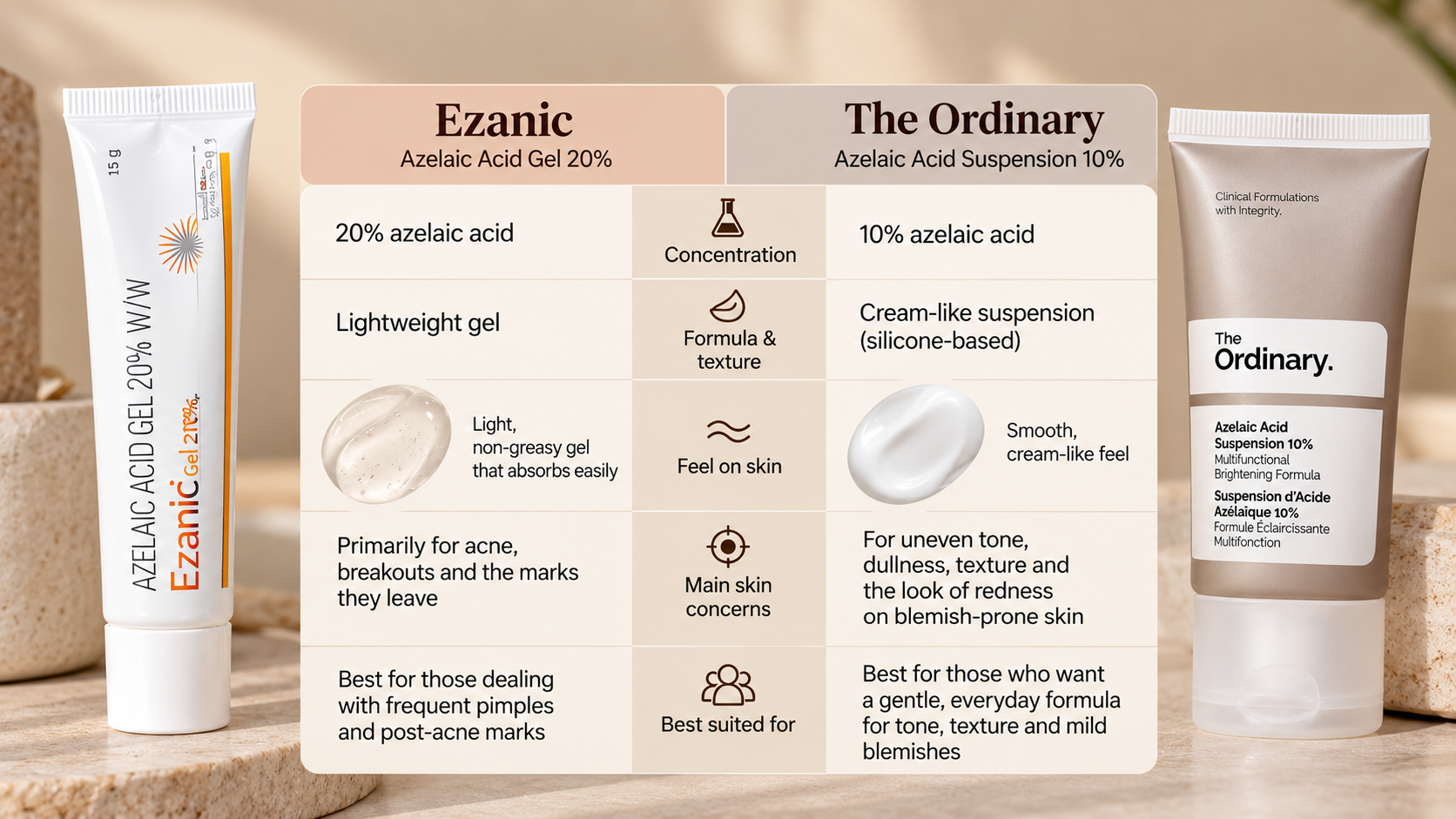
The main difference between Ezanic and The Ordinary azelaic acid is concentration and formula, because Ezanic is the higher-strength option with 20% azelaic acid in a lightweight gel aimed at acne, while The Ordinary contains 10% in a silicone-based, cream-like suspension aimed at daily tone and texture care.
1. Azelaic Acid Concentration
Ezanic contains 20% azelaic acid and The Ordinary contains 10%, which makes Ezanic the higher-concentration option, but a higher percentage is not automatically better, because stronger formulas can be harder for some skin to tolerate and the right strength depends on your concern and how your skin responds.
2. Formula and Texture
Ezanic is a lightweight gel that you apply in a thin layer to problem areas, while The Ordinary is a cream-like suspension built on silicones such as dimethicone, so Ezanic tends to feel lighter on the skin and The Ordinary tends to feel smoother and more like a light cream.
3. Skin Concerns
Both products target acne-related concerns, dark marks and redness, but Ezanic is positioned as an acne treatment for breakouts and the marks they leave, while The Ordinary is positioned as a daily formula for uneven tone, dullness, texture and the look of redness on blemish-prone skin.
So the question is: what are you trying to fix? Frequent pimples and dark spots point more towards Ezanic. Dull, uneven skin with the odd blemish points more towards The Ordinary.
Ezanic vs The Ordinary Azelaic Acid: How to Use Each Product
Ezanic Azelaic Acid Gel and The Ordinary Azelaic Acid Suspension 10% can both fit into a skincare routine, but their application instructions differ.
Follow the directions below:
| Ezanic Azelaic Acid Gel | The Ordinary Azelaic Acid Suspension 10% | |
| When to use | Start at night, gradually increasing as tolerated | Morning and/or evening, following the brand’s directions |
| How much | A small amount on affected areas, as directed | A small amount across the face |
| When to apply | On clean, dry skin | After water-based serums |
| Sunscreen | Every morning | Every morning |
If your skin stings, try the sandwich method: a thin layer of moisturiser, then your azelaic acid, then moisturiser again. A barrier-friendly cream like the Facefacts Ceramide Moisturising Gel Cream or the Mixsoon Bifida Cream works well for this. If you’re confused about what goes first, our guide on layering skincare products breaks it down.
Which Is Better for Acne and Blemishes, Ezanic 20% or The Ordinary 10%?
We’ll be honest: there’s no head-to-head study proving one product clears acne better than the other. What we can compare is how each one is designed.
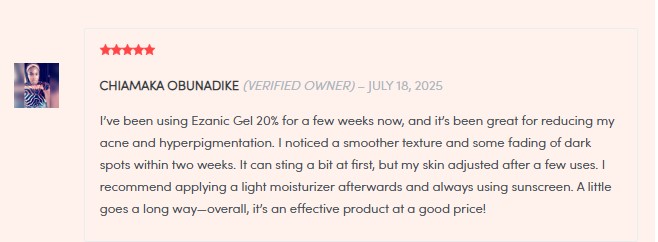
At Beauty By Daz, we’ve received positive feedback from customers using Ezanic Azelaic Acid Gel 20% for acne and post-acne marks. Here’s what two verified buyers had to say about their experience:

So ask yourself: are your pimples a constant thing, or do they just show up before your period and leave a mark? If it’s constant, Ezanic is likely the more targeted option. If it’s occasional, The Ordinary may be all you need.
Either way, azelaic acid works best as part of a simple routine: a gentle acne cleanser like the CeraVe Acne Control Cleanser, a light moisturiser and sunscreen. If you need help with those, see our picks for the best acne face wash for sensitive skin in Nigeria and the best moisturisers for acne-prone skin.
At Beauty By Daz, we’ve guided many clients through acne routines, and we always encourage them to introduce azelaic acid gradually and follow the product’s directions rather than using too much, too soon.
Ezanic vs The Ordinary Azelaic Acid for Dark Spots
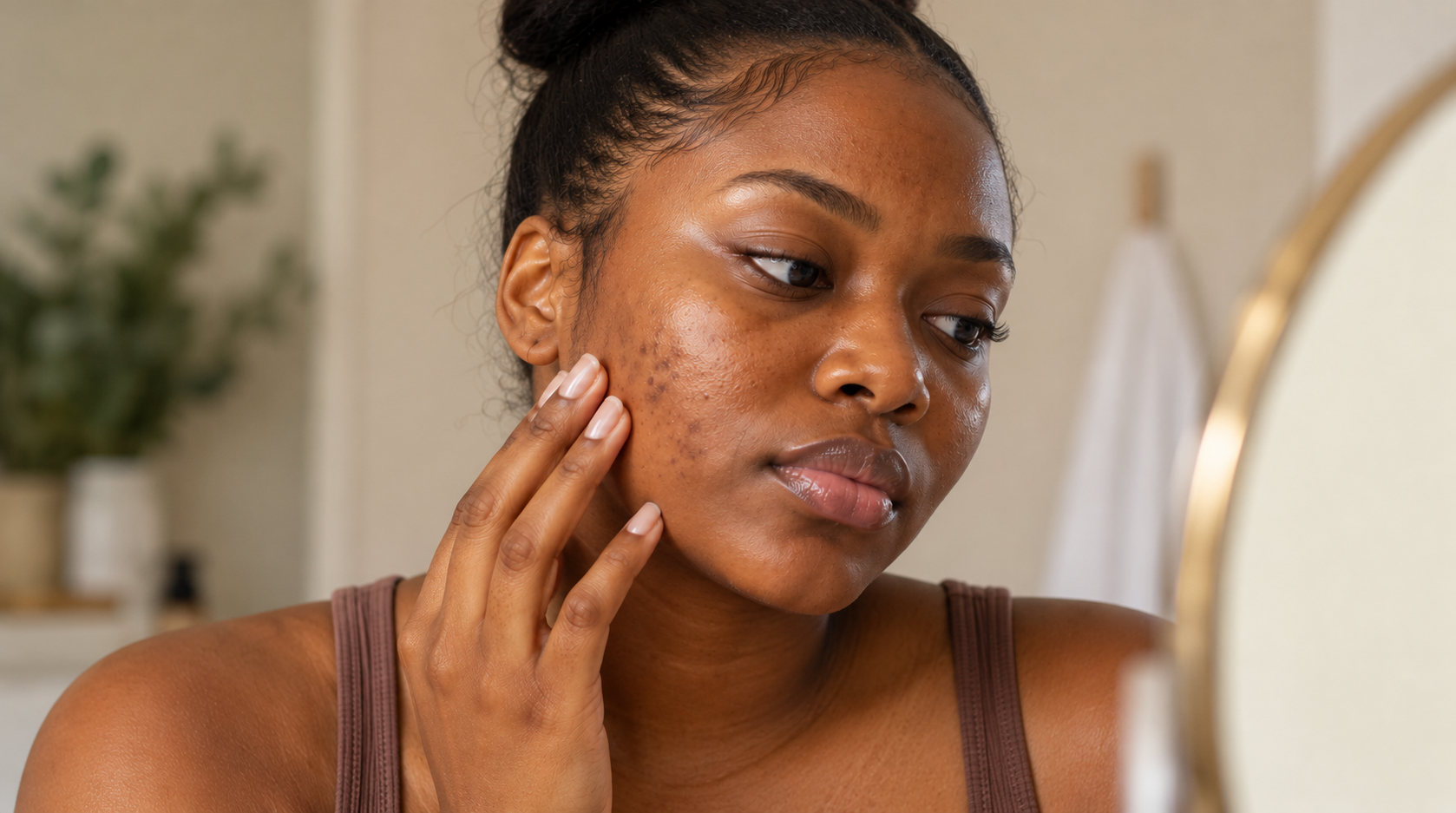
Both can help fade dark spots and uneven skin tone, so the better fit depends on where your marks come from.
If your marks keep coming back because the pimples keep coming back, treating the acne is part of treating the dark spots. That’s where a targeted product like Ezanic fits in. If your skin is mostly clear but looks dull or patchy, The Ordinary’s full-face, daily approach may make more sense.
Whichever you choose, sunscreen is non-negotiable. Without it, you’re fading spots at night and inviting new ones in the morning. Try a light, everyday option like the Skin Aqua UV Moisture Gel SPF 50, or see our list of the best sunscreens in Nigeria for all skin types. For more options, read our guides to face serums for dark spots and serums for dark spots in Nigeria.
Side Effects of Ezanic vs The Ordinary Azelaic Acid
Both azelaic acids can cause tingling, itching, mild stinging, dryness or light peeling in the first few weeks, and these reactions may be more noticeable with Ezanic’s higher 20% strength, so patch test either product, build up slowly and stop if you get severe burning, rashes or swelling.
Here’s what’s normal and what isn’t:
- Usually normal: mild tingling or itching after application, light flaking, and a few pimples in your usual breakout areas in the early weeks (purging).
- Not normal: severe burning, rashes, swelling, or breakouts in places you never break out.
- Worth watching on darker skin: Ezanic’s Indian drug listings note that azelaic acid may cause changes in skin colour, especially on darker skin. If you notice unusual light patches, stop and get advice.
To reduce irritation, apply on completely dry skin, start slowly and don’t use azelaic acid on broken or over-exfoliated skin. If your skin is already stinging from everything, fix that first; our guide to repairing a damaged skin barrier and a calming serum like the FaceFacts Nourish + Restore Ceramide Serum can help.
Which One Is Better Value for Money in Nigeria?
Ezanic costs ₦7,950 for 15g of 20% azelaic acid used on targeted areas, while The Ordinary costs ₦10,500 for 30ml of 10% azelaic acid designed for full-face daily use. So the better value depends on whether you need spot treatment or an everyday all-over formula.
How Much Do They Cost in Nigeria?
Ezanic costs less upfront and may be a good choice if you’re mainly treating pimples and the dark spots they leave behind.
The Ordinary costs more, but you get a bigger bottle for applying across your face.
In the end, choose the product that suits your skin concerns and fits your budget, rather than looking at the price alone.
Ready to shop? Get the Ezanic Azelaic Acid Gel or The Ordinary Azelaic Acid Suspension 10% at Beauty By Daz and also explore our The Ordinary skincare range for more products.
Who Should Buy Ezanic Azelaic Acid Gel?
Consider Ezanic if:
- Active breakouts are your main concern.
- Your skin already tolerates skincare actives well.
- You want to target pimples and post-acne marks.
- You prefer a lightweight gel.
- You want a lower upfront cost.
Who Should Buy The Ordinary Azelaic Acid Suspension 10%?
The Ordinary may suit you if:
- This is your first time using azelaic acid.
- You prefer a lower concentration.
- Uneven skin tone, dullness or rough texture is your main concern.
- You want to apply the product across your face.
- You prefer a smooth, cream-like texture.
Frequently Asked Questions About Ezanic and The Ordinary Azelaic Acid
1. Is Ezanic a Good Azelaic Acid?
Yes, Ezanic is a well-regarded 20% azelaic acid gel made by Intas Pharmaceuticals and sold as an acne treatment, and at Beauty By Daz it holds a 4.88 out of 5 customer rating, though its higher strength means you should start slowly.
2. Does The Ordinary Azelaic Acid Actually Work?
Yes, The Ordinary Azelaic Acid Suspension 10% can visibly improve uneven tone, dullness, texture and the look of redness with consistent use, but results build gradually over several weeks and depend on daily sunscreen and steady application.
3. What Is the Difference Between Azelaic Acid and Azelaic Acid Suspension?
Azelaic acid is the active ingredient, while a suspension is a type of formula where azelaic acid particles are held evenly in a base instead of being fully dissolved, which is how The Ordinary delivers 10% azelaic acid in a cream-like texture.
4. Can I Use The Ordinary Azelaic Acid Every Day?
Yes, The Ordinary’s directions say you can apply a small amount morning and evening, but if your skin is reactive or you are new to acids, start once a day or every other day and build up.
5. Can I Use Alpha Arbutin and Azelaic Acid Together?
Yes, The Ordinary does not list alpha arbutin among the ingredients to avoid with its azelaic acid, so you can use The Ordinary Alpha Arbutin 2% + HA in the same routine, applying the thinner serum first and patch testing the combination.
6. What Should You Never Mix With Azelaic Acid?
Avoid using azelaic acid in the same routine as strong exfoliating acids like AHAs and BHAs, retinoids such as tretinoin, direct vitamin C, peptides and hydroquinone, and alternate them on different nights or times of day instead. See our guide to acids in your skincare routine.
8. Why Am I Getting More Pimples After Using Azelaic Acid?
New pimples in your usual breakout areas during the first few weeks are often purging as azelaic acid speeds up skin turnover, but breakouts in new areas, rashes or severe burning are not normal and mean you should stop and get advice.
9. Where Can I Buy Original Ezanic and The Ordinary Azelaic Acid in Nigeria?
You can buy original Ezanic and The Ordinary azelaic acid from Beauty By Daz online with nationwide delivery or at our Ogudu City Mall store in Lagos, and our team can help you choose through a skin consultation.
Final Thoughts: Should You Buy Ezanic or The Ordinary Azelaic Acid in 2026?
If you’re dealing with active pimples and the dark marks they leave behind, Ezanic Azelaic Acid Gel is worth considering because it contains 20% azelaic acid.
If your main concerns are uneven skin tone, rough texture and dullness, The Ordinary Azelaic Acid Suspension 10% is a better fit.
For more guidance on choosing between the two, reach out to our team on WhatsApp at +234 703 975 6477.
Ciao!